What to Do When a Client Hits You During a Session: A Safety Guide for RBTs
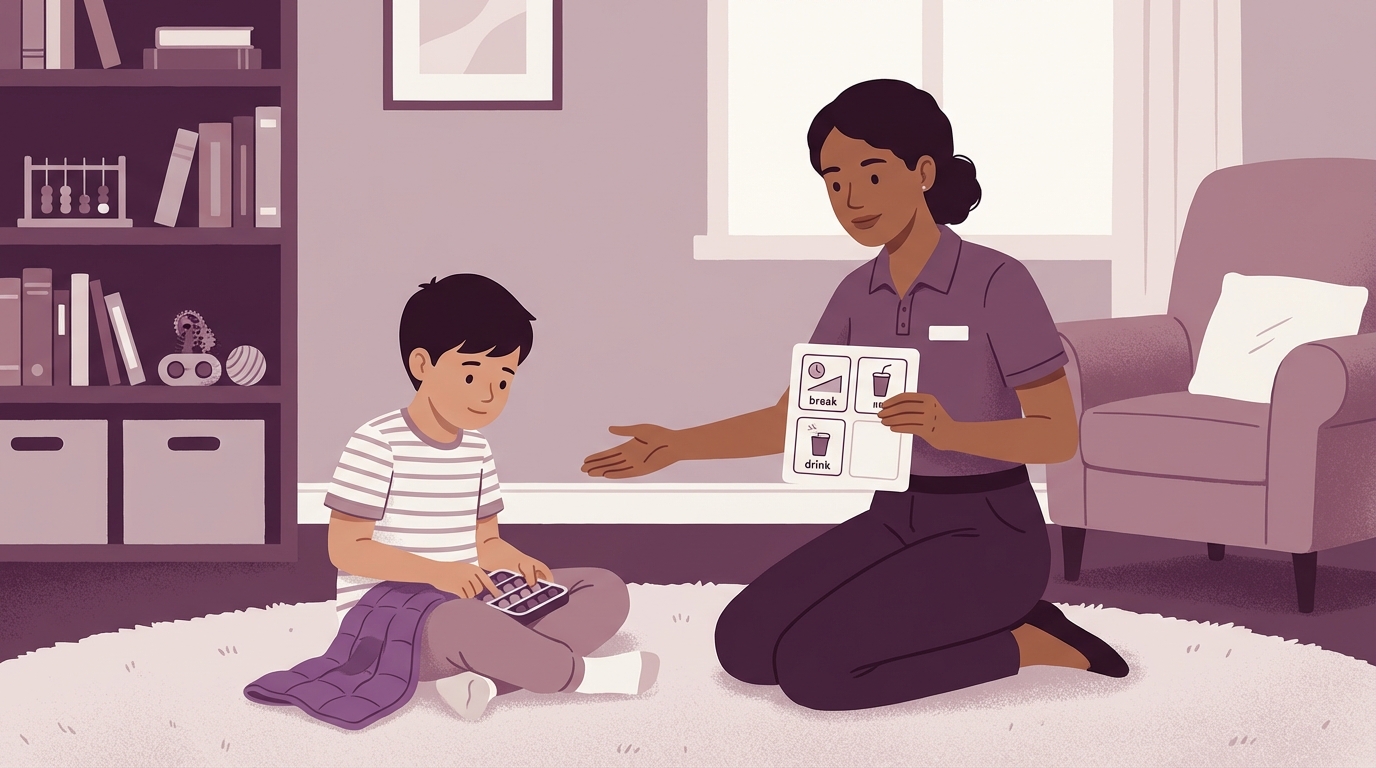
Being hit by a client during a session is one of the most difficult situations an RBT can face. It happens more often than many professionals expect, and it can leave you feeling unsure, unsafe, or wondering if you did something wrong. The truth is that aggression is a common challenge when working with children with autism, particularly in the 5-12 age range when communication skills may still be developing and emotional regulation is still being learned. Understanding why it happens and what to do in the moment is critical to your safety, your client's progress, and the quality of care you provide.
Aggression, including hitting, is typically a form of communication. Children who hit are often trying to escape a difficult demand, gain access to something they want, seek sensory input, or communicate frustration when they lack the verbal skills to do so. This does not make the behavior acceptable, but it does mean the behavior serves a function for the child. Your role as an RBT is to remain safe, follow your client's behavior intervention plan, collect data, and communicate immediately with your supervising BCBA. You are not expected to solve the problem alone, and you are not expected to tolerate being hurt.
The BACB Ethics Code (2022) is clear that behavior analysts and their supervisees must prioritize the wellbeing and dignity of clients while also ensuring their own safety. You have the right to work in an environment where your safety is protected. If a client's aggression puts you at risk, your BCBA is responsible for updating the behavior plan, providing additional training, adjusting the environment, or modifying the intervention. Your job is to implement the plan with fidelity, communicate what happened, and follow the safety protocols your agency has in place.
This guide will walk you through what to do in the moment, how to prevent future incidents, and how to work with your team to create a safer, more effective treatment environment for both you and your client.
Practical Strategies You Can Use
1. Stay calm and use a neutral tone. When a client hits you, your first responsibility is to remain as calm as possible. Children with autism are often highly attuned to your emotional response. If you react with frustration, fear, or anger, it may reinforce the behavior or escalate the situation. Use a calm, neutral voice and avoid lengthy verbal responses. A simple, flat "no hitting" or silence may be more effective than a long explanation. Your goal is to avoid providing attention or escape as a consequence for the aggression.
2. Follow the crisis management plan exactly as written. Every client with a history of aggression should have a written behavior intervention plan that includes a crisis management section. This plan tells you exactly what to do when aggression occurs, including whether to block, redirect, create distance, or end the session. Do not improvise. If the plan says to provide space and remove demands, do that. If it says to use a specific blocking technique you were trained on, use only that technique. If you have not been trained on physical intervention, do not attempt it. Your fidelity to the plan protects you legally and clinically.
3. Protect yourself first. If a client is hitting you and you feel unsafe, you are allowed to create distance. Step back, move out of arm's reach, or leave the room if necessary. Your safety is not negotiable. Some RBTs worry that leaving will reinforce escape-maintained behavior, but your BCBA can address that in the behavior plan. If the environment is not safe, you cannot provide effective treatment. Communicate immediately with your BCBA after any incident where you had to remove yourself for safety.
4. Collect data immediately after the incident. As soon as it is safe to do so, document what happened. Record the antecedent (what happened right before the hitting), the behavior (how many hits, where on your body, intensity), and the consequence (what you did, what the client did next). This data is essential for your BCBA to conduct a functional analysis and revise the intervention. If you cannot remember details later, the data will be incomplete. Many RBTs use a quick voice memo or write a note on their phone immediately after the incident, then transfer it to the official data sheet.
5. Communicate with your BCBA the same day. Do not wait until your next supervision meeting to report aggression. Send a message, make a call, or file an incident report the same day it happens. Your BCBA needs to know immediately so they can review the plan, provide additional support, or adjust the treatment. If the aggression is part of an emerging pattern, early communication allows for early intervention. If you were injured, document that as well and follow your agency's injury reporting procedures.
6. Use antecedent interventions to prevent future incidents. Many aggressive behaviors can be reduced by changing what happens before the behavior occurs. Work with your BCBA to identify triggers. Does the hitting happen during transitions? During difficult tasks? When preferred items are removed? Once you know the antecedent, you can use strategies like visual schedules, choice-making, task modification, or pre-teaching to reduce the likelihood of aggression. Antecedent interventions are often more effective and more humane than consequence-based strategies alone.
7. Reinforce replacement behaviors consistently. If your client has been taught a replacement behavior (like saying "break," using a communication card, or raising a hand), reinforce it every single time. Reinforce it immediately, reinforce it enthusiastically, and make sure the reinforcement is stronger than what the client gets from hitting. If hitting gets them out of work but asking for a break does not, they will keep hitting. Your BCBA should help you design a reinforcement schedule that makes the replacement behavior more efficient and more effective than aggression.
8. Request additional training if you feel unprepared. If you have not been trained on how to respond to aggression, ask for training. This might include safety care techniques, de-escalation strategies, or behavioral function training. The BACB requires that supervisors provide competency-based training to RBTs, and that includes training on the specific challenging behaviors you will encounter. If you do not feel competent, you should not be expected to implement the plan. Speak up and request the training you need.
Resources from Special Learning
Behavior Technician Resources (Free)
Special Learning offers a library of free resources specifically designed for RBTs, including guides on safety, crisis management, and working with challenging behavior. These resources include downloadable PDFs, checklists, and video examples that walk you through real scenarios. You can access them at https://special-learning.com/for-behavior-technicians/. These tools are designed to support you in the field and help you feel more confident when difficult situations arise.
All Access
If you are working toward your BCBA or are looking to deepen your clinical skills, the All Access subscription gives you access to hundreds of hours of video training on topics including functional behavior assessment, crisis intervention, ethical decision-making, and trauma-informed care. You can filter by topic, presenter, or skill level, and all content is eligible for professional development units (PDUs) if you are working toward certification. This is especially useful if you want to understand the clinical rationale behind the strategies your BCBA is asking you to implement. Learn more at https://store.special-learning.com/library.
What to Do This Week
Day 1: Review your client's current behavior intervention plan. Read the crisis management section carefully. If there is no crisis plan or you do not have access to it, email your BCBA today and request a copy. Make sure you understand every step.
Day 2: Document the most recent incident in detail. Write down the antecedent, the behavior, and the consequence. Include the time, location, who was present, and what you did. Send this documentation to your BCBA and ask for feedback on whether you followed the plan correctly.
Day 3: Identify 1 or 2 antecedent patterns. Look at your data from the past 2 weeks. Does the hitting happen at the same time of day? During the same type of task? When the same person is present? Write down what you notice and share it with your BCBA.
Day 4: Practice the replacement behavior with your client during a calm moment. If the replacement is a communication card, role-play using it. If it is a verbal request, practice it during a preferred activity. Reinforce the replacement behavior heavily when the client is calm so they are more likely to use it when frustrated.
Day 5: Schedule a 15-minute check-in with your BCBA to discuss what happened, review the data, and confirm next steps. Ask specific questions: "What should I do if he hits me again?" "How long should I wait before re-presenting the demand?" "Do I need additional training?" Write down the answers and keep them with your session materials.
Looking for a guide built for your specific situation?
Our 2-minute survey gives you a free personalized guide grounded in Special Learning's clinical library.
Take the 2-Minute Survey