
Getting a Nonverbal 4-Year-Old to Use an AAC Device Consistently: A Guide for SLPs and Caregivers
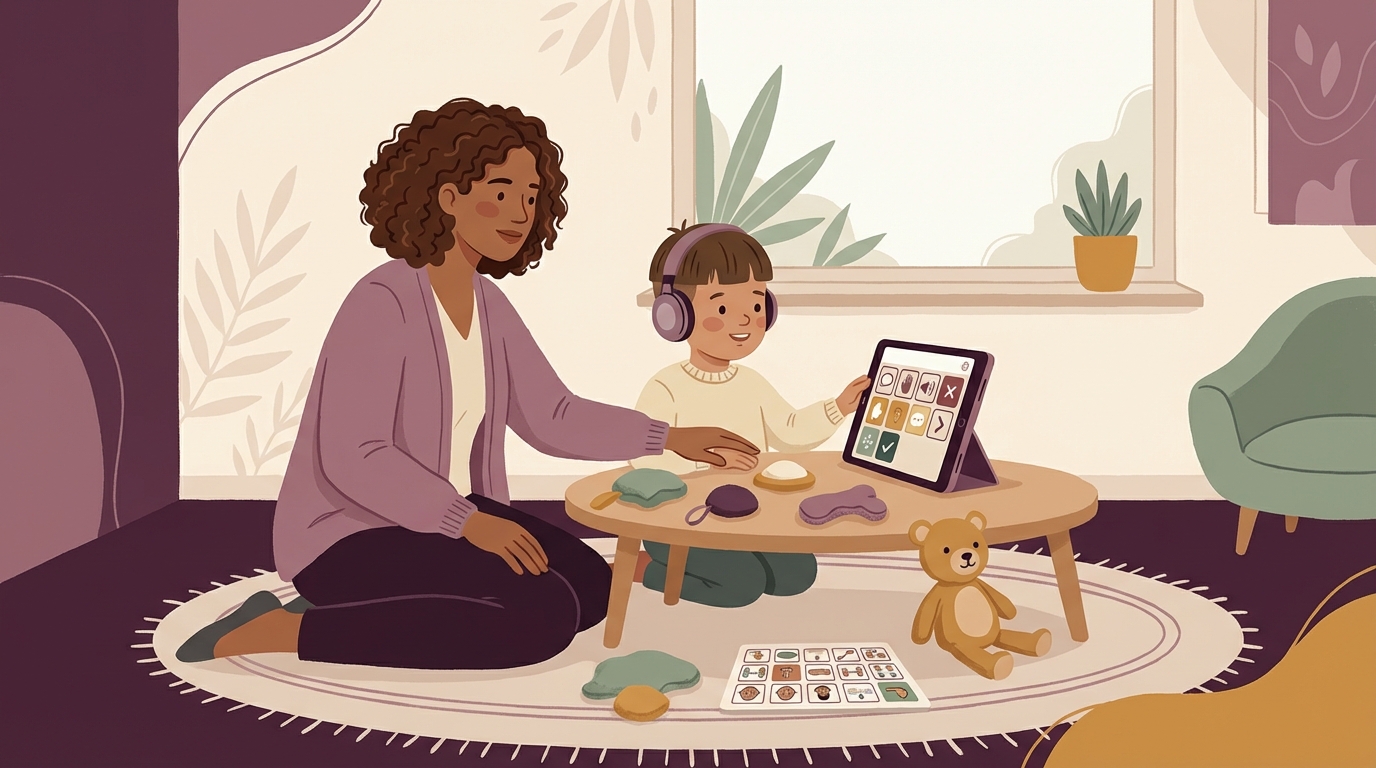
Nonverbal 4-year-olds with autism face a profound daily challenge: they have needs, wants, and preferences, but no reliable way to make them known. This communication gap often leads to frustration, problem behavior, and missed opportunities for social connection. When a child cannot request "cookie" or "help" or "more," they may resort to tantrums, self-injury, or simply withdrawing. As one clinical supervisor noted in Special Learning's SLP-ABA collaboration training, "many times that's enough to decrease some of the problem behavior if the function was simply to gain access to that item." Functional communication is not just a skill to teach. It is the foundation of a child's quality of life.
Augmentative and alternative communication (AAC) devices, whether low-tech picture exchange systems or high-tech speech-generating devices, offer a bridge. But introducing the device is only the first step. The real challenge is consistency. Why does a 4-year-old use the device with the SLP but not at home? Why does he hand over a picture for "juice" in the morning but grab and scream in the afternoon? The answer lies in understanding the behavioral function of communication, the role of motivating operations, and the need for systematic teaching across people, settings, and times of day.
From a behavioral perspective, communication is an operant. The child learns to use the AAC device because it produces a consequence (access to a preferred item, attention, escape from a demand). This is called a mand, defined as "the verbal operant which is evoked by a motivational operation and the consequence is access to the stimuli representing that motivational operation." If the child is hungry and uses the device to request "apple," and immediately receives an apple, the behavior is reinforced. If the child is not hungry, or if the device is unavailable, or if the caregiver does not respond, the behavior weakens. Consistency requires that we engineer the environment, the motivating operations, and the consequences so that using the AAC device is always the most effective, efficient way to get needs met.
This is not a speech-only problem, and it is not a behavior-only problem. It is an interdisciplinary problem. The SLP brings expertise in language development, augmentative communication modalities, and articulation or phonology. The behavior analyst or BCBA brings expertise in reinforcement, shaping, task analysis, and generalization programming. The parent knows the child's daily routines, preferences, and the moments when communication breaks down. The teacher or educator manages the classroom environment and peer interactions. As Jennifer Kaupp, dual-certified SLP and BCBA, emphasized in the collaboration webinar, "we can then go away from that meeting just kind of really engaged with each other on, 'Oh, well I can work on this in this situation' and 'Oh, this would be really great to do for our circle time or when we're walking the hallway.'" When these perspectives align, the child's progress accelerates.
Practical Strategies You Can Use
1. Conduct a task analysis of AAC use and compare it to the child's current repertoire. Before you can teach consistency, you need to know what skills are missing. A complete mand using an AAC device requires: (1) a motivating operation (the child wants something), (2) knowing who has access to the item, (3) gaining that person's attention, (4) selecting the correct icon or picture, and (5) waiting for the item to be delivered. Many nonverbal children can do step 4 but skip steps 2 and 3, leading to frustration when no one responds. As described in the mand training webinar, "this individual does have an EO for a cookie, but instead of going to somebody he opens the pantry door and then he tries to climb up the shelves." Write down the ideal task analysis, then observe the child and note which steps are missing. That is where your teaching begins.
2. Use a communication modality assessment to confirm the device is a good fit. Not every nonverbal child is ready for every type of AAC. High-tech devices require fine motor skills, visual discrimination, and often some understanding of cause and effect. Low-tech picture exchange requires the child to locate a picture, hand it to a communication partner, and release it. Sign language requires imitation and the ability to tolerate physical prompting. Aaron Lumbard's mand training presentation included a 25-item communication modality assessment tool that evaluates prerequisite skills like joint attention, motor imitation, and whether the child is "active" or prefers to sit still. If your current device does not match the child's skill set, consistency will be elusive. Reassess and consider whether a different modality (or a hybrid approach) is warranted.
3. Choose highly preferred items and restrict access outside of mand opportunities. This is the most challenging but most critical strategy. To create a strong motivating operation, the child must want the item enough to use the device. Lumbard explained, "once an item is targeted to really effectively teach functional communication, the individual really should only access that item when he correctly mands for the item, although prompting is okay." If the child can access juice by pointing, grabbing, or tantruming, the device becomes optional. If juice is only available through the device, the device becomes necessary. Start with 2 to 3 highly preferred items (identified through a preference assessment) and make them available only through AAC requests. Use errorless prompting (most-to-least) so the child experiences immediate success and reinforcement.
4. Program for generalization from day 1. Generalization does not happen automatically, especially for children with autism. The webinar on mand training stated clearly: "do not expect the individual to generalize their communication to every item. Generalization occurs with planning. You must plan for generalization, plan to teach generalization, and monitor for generalization." This means systematically varying the communication partner (SLP, parent, teacher, peer), the setting (clinic, home, classroom, playground), the time of day, and eventually the items requested. If you only teach manding in the therapy room with one adult, the child will only mand in the therapy room with that adult. Build a matrix of generalization targets and track progress across conditions.
5. Collaborate with the behavior analyst or BCBA to align reinforcement procedures. If the child is receiving ABA services, the behavior analyst is likely working on manding or functional communication as well. Align your targets, your prompting procedures, and your data collection. Use the same icons or symbols. Use the same reinforcement schedule. The SLP-ABA collaboration webinar highlighted that speech pathologists and behavior analysts often target the same skills from different theoretical angles, but "we both can bring great things to the table if we can share our specialty skill set." Schedule a brief weekly check-in (even 10 minutes) to compare data, adjust prompts, and ensure the child is not receiving conflicting cues.
6. Train caregivers to prompt and reinforce AAC use in natural routines. Consistency at home is where many programs break down. Parents may not feel confident using the device, may forget to prompt, or may give in when the child resorts to problem behavior. Provide a simple visual checklist or video model showing exactly how to prompt the device and deliver the reinforcer. Identify 3 to 5 high-frequency daily routines (snack time, bathtime, bedtime, car rides) where the child will practice. Role-play with the parent during the session so they leave with confidence and a plan. As the multidisciplinary IEP collaboration webinar noted, "parents are their child's greatest advocate and they are really the most consistent thread throughout the child's educational life." Equip them to succeed.
7. Use errorless learning and most-to-least prompting to prevent frustration. Nonverbal children with limited communication have often experienced years of communication failure. Every time they try to ask for something and fail, the behavior weakens. Errorless learning ensures the child always produces the correct response, even before independent attempts. Start with full physical prompts (hand-over-hand to select the icon), then fade to partial physical, gestural, and finally expectant wait time. The child should experience a 100% success rate in the first few sessions, with immediate access to the requested item. As the mand training webinar emphasized, "ensure success with that errorless learning approach. We want to avoid that failure."
8. Take data on independent mands, prompted mands, and generalization probes. You cannot improve what you do not measure. Use a simple data sheet with columns for: date, item requested, level of prompt needed (independent, gestural, partial physical, full physical), setting, and communication partner. Track the percentage of independent mands per session and per setting. Conduct weekly generalization probes (novel item, novel person, or novel location) and graph the results. Share the data with the family and the IEP team. When the data show progress, celebrate it. When the data show a plateau, adjust your procedure. Data-driven decision-making is a core principle of both speech-language pathology and applied behavior analysis.
Resources from Special Learning
All Access (Annual Subscription): If you are an SLP working regularly with nonverbal preschoolers with autism, this subscription gives you on-demand access to interdisciplinary training that bridges speech pathology and applied behavior analysis. You will find the full webinar on SLP-ABA collaboration (featuring dual-certified clinicians Melanie Piché and Jennifer Kaupp), the complete mand training series by Aaron Lumbard (including the communication modality assessment and task analysis tools referenced in this guide), and modules on augmentative communication, verbal behavior, and functional communication training. You can watch the sessions at your own pace, download the tools, and revisit the content as you troubleshoot cases. Many SLPs use this library to fulfill their continuing education requirements while building practical skills they can use the next day. Annual access is $299. Learn more at https://store.special-learning.com/library.
The library also includes the multidisciplinary IEP collaboration webinar, which is particularly useful if you are trying to align your AAC goals with the behavior analyst, occupational therapist, and classroom teacher. The session walks through the roles of each team member, models of collaboration, and ethical considerations when disciplines overlap. If you have ever felt like you are working in a silo, or if your AAC recommendations are not being implemented consistently across settings, this training will give you language and strategies to bring the team together.
What to Do This Week
Day 1: Conduct a task analysis of the AAC mand. Write down every step required for the child to independently request an item using the device (motivating operation present, approach communication partner, gain attention, select icon, wait for delivery). Then observe the child during a snack or play session and note which steps he can do independently and which are missing. This is your baseline.
Day 2: Identify 2 highly preferred items using a brief preference assessment (offer 5 items, note which the child reaches for or consumes first). Restrict access to those items outside of AAC practice sessions. Inform the family and any other adults working with the child that these items are now "communication targets" and should only be delivered when the child uses the device (with prompting as needed).
Day 3: Run 5 errorless mand trials with one of the target items. Use full physical prompting (hand-over-hand) to help the child select the icon, then immediately deliver the item with enthusiastic praise. Do not wait for independent attempts yet. The goal today is 100% success and strong pairing of the device with reinforcement.
Day 4: Begin fading prompts. Run 10 trials, starting each trial with a partial physical prompt (touch the child's elbow instead of hand-over-hand). If the child completes the response, deliver the item. If not, provide the full prompt and deliver the item anyway (errorless). Take data on how many trials required full prompts vs. partial prompts. Aim for at least 3 trials with partial prompts by the end of the session.
Day 5: Introduce a generalization probe. Have a different adult (parent, co-therapist, classroom aide) present the target item and prompt the AAC request using the same procedure you used. Observe and take data. If the child responds, you have early evidence of generalization. If not, plan to systematically teach across communication partners next week. Share your data and your plan with the family and the team.
Looking for a guide built for your specific situation?
Our 2-minute survey gives you a free personalized guide grounded in Special Learning's clinical library.
Take the 2-Minute Survey