
For special education teachers, paraprofessionals and school teams
Special Education Training Online: where to find it, and how to choose
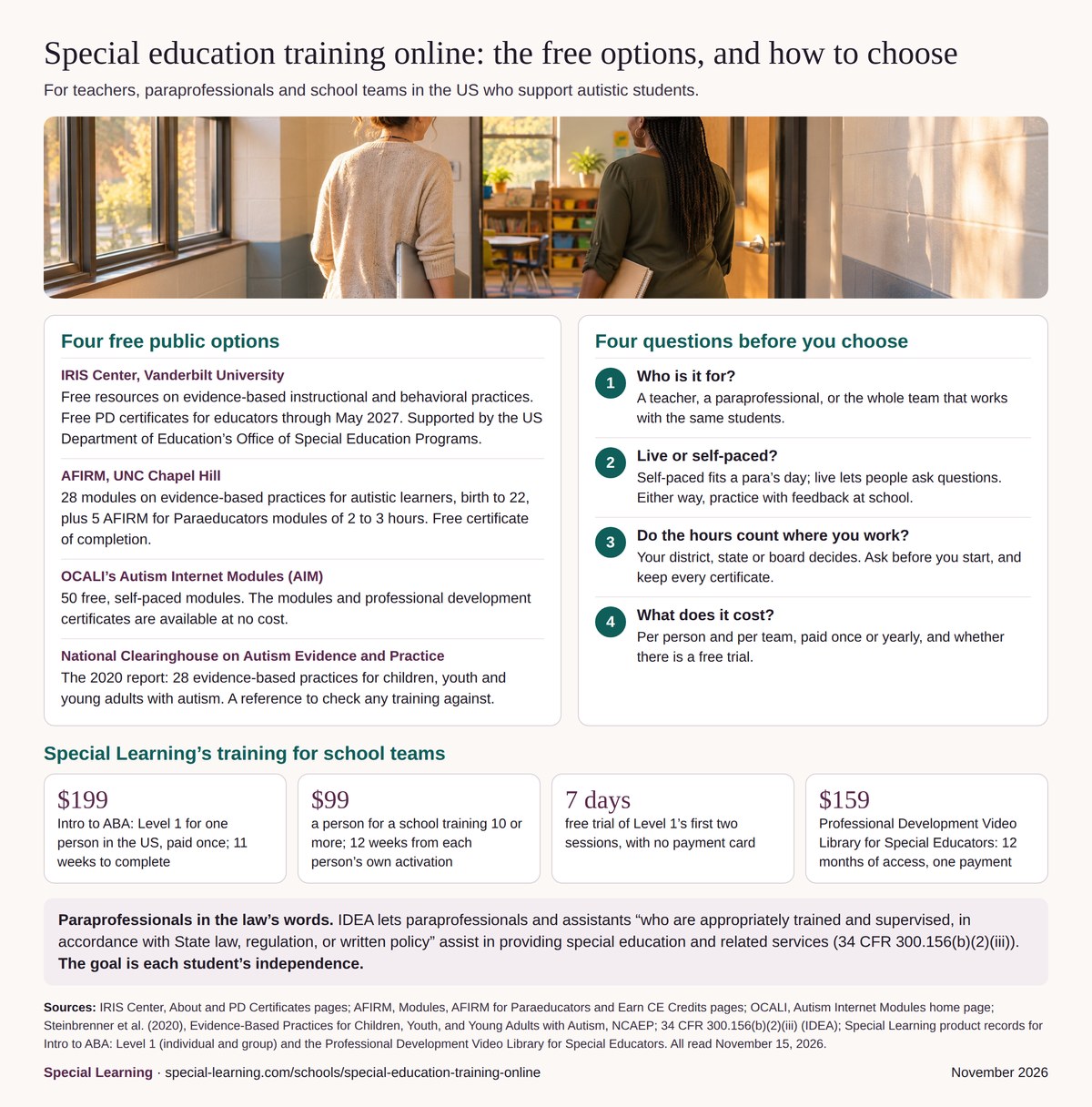
Four free public sources cover a great deal: the IRIS Center at Vanderbilt University, AFIRM at UNC Chapel Hill, OCALI’s Autism Internet Modules (AIM) and the National Clearinghouse on Autism Evidence and Practice (NCAEP). Before you choose, ask four questions: who the training is for, whether it is live or self-paced, whether its hours count where you work, and what it costs. For one course a teacher and the paraprofessionals beside them can take together, Special Learning’s Intro to ABA: Level 1 is $199 for one person, and $99 a person for a school training 10 or more. Anyone can try the first two sessions free for 7 days, with no payment card.
Try Level 1 free for 7 days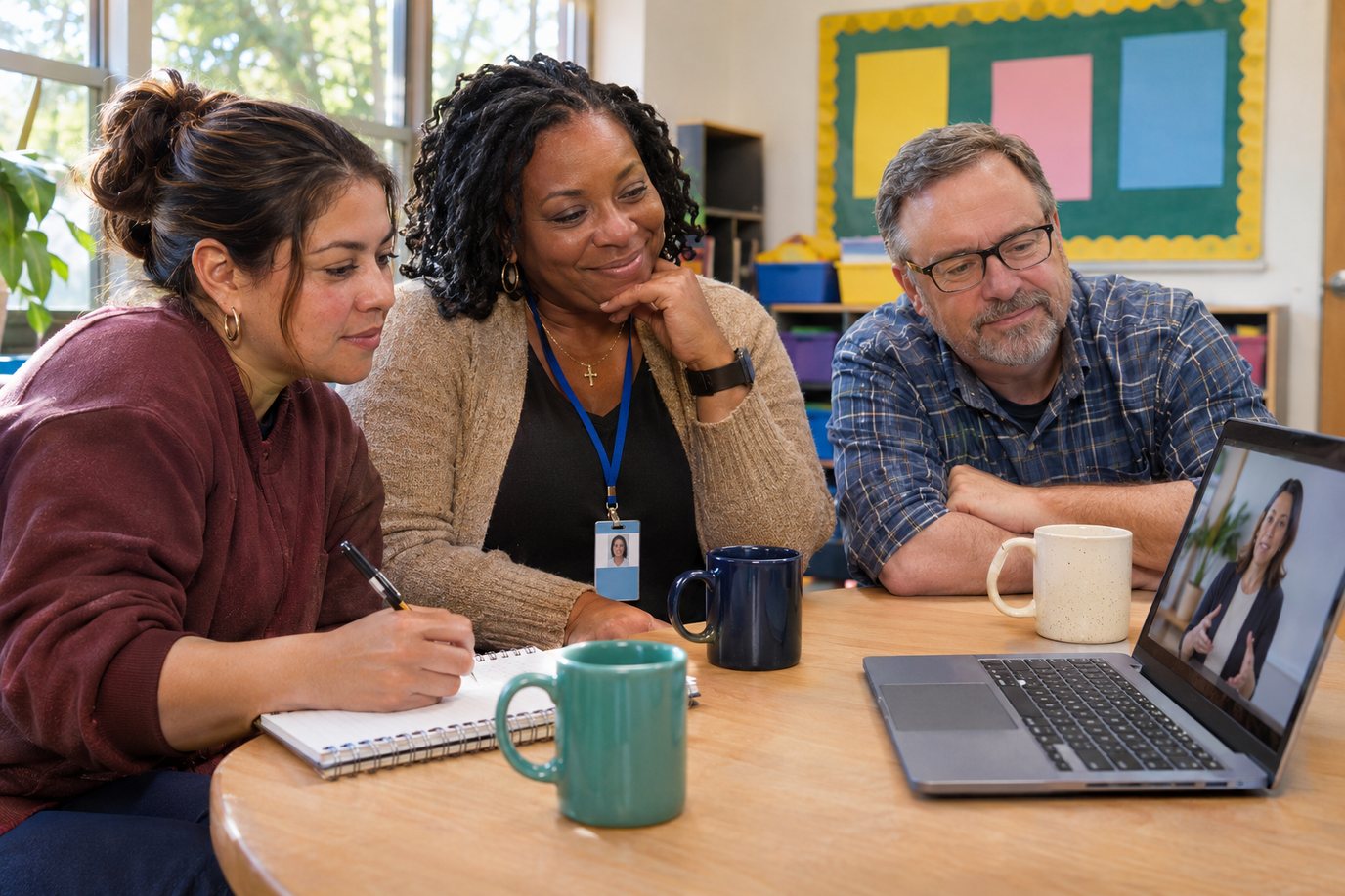
Read on each provider’s own page, November 15, 2026
01The free public options
Each of these is funded or run by a university or public program, and each is worth opening before you pay for anything. Terms change, so each link goes to the page we read on November 15, 2026.
| Source | What it offers | Cost and certificate, as published | Best for |
|---|---|---|---|
| IRIS Center, Vanderbilt University | “Supported by the U.S. Department of Education’s Office of Special Education Programs” (About IRIS). It “develops and disseminates free, engaging online resources about evidence-based instructional and behavioral practices”: modules, case studies and skill sheets. | Free. “IRIS PD Certificates for Educators will remain free through May 2027” (PD certificates). | Teachers who want a structured module on one topic, such as classroom behavior. |
| AFIRM, UNC Chapel Hill | 28 modules on evidence-based practices, built on the 2020 NCAEP report, for autistic learners from birth to age 22. AFIRM for Paraeducators adds five modules (prompting, reinforcement, supporting peer interactions, time delay and visual cues) of 2 to 3 hours each, for paraeducators working with students aged 5 to 12. | Free, with “a free Certificate of Completion at the end of each module” on a post-assessment score of 70 or above; optional CEUs cost $35 a module (AFIRM CE page). | Learning one practice step by step for one student; paraprofessionals in elementary schools. |
| OCALI’s Autism Internet Modules (AIM) | “50 free, self-paced modules” with pre- and post-assessments. The 1.5-hour “Many Faces of Autism” module is the starting point, and a Teams portal lets a leader organize learning for a group. | Free: “These modules and professional development certificates are available at no cost.” Graduate credit is optional and paid through Ashland University (AIM). | A whole staff building a shared grounding in autism, one topic at a time. |
| NCAEP, UNC Chapel Hill | Not a course: the 2020 report on evidence-based practices for children, youth and young adults with autism, which identified 28 practices from research published between 1990 and 2017. | Free to download. | Checking whether any training you are considering teaches practices with research behind them. |
Free modules work well one practice at a time. Many school teams also take one shared course, so a teacher and the paraprofessionals who work with the same students learn the same words and methods.
Before you choose
02Four questions for choosing special education training online
1. Who is it for: a teacher, a paraprofessional, or the whole team?
A special education teacher plans instruction; a paraprofessional often carries it out, minute by minute, beside one student. Federal special education rules let schools use paraprofessionals and assistants “who are appropriately trained and supervised, in accordance with State law, regulation, or written policy” (34 CFR 300.156(b)(2)(iii)), so your state’s rule is the place to start for paraprofessionals. AFIRM for Paraeducators is designed for paraeducators working with autistic elementary school students aged 5 to 12, and a course made for teachers and aides alike lets a teacher and a paraprofessional learn the same methods.
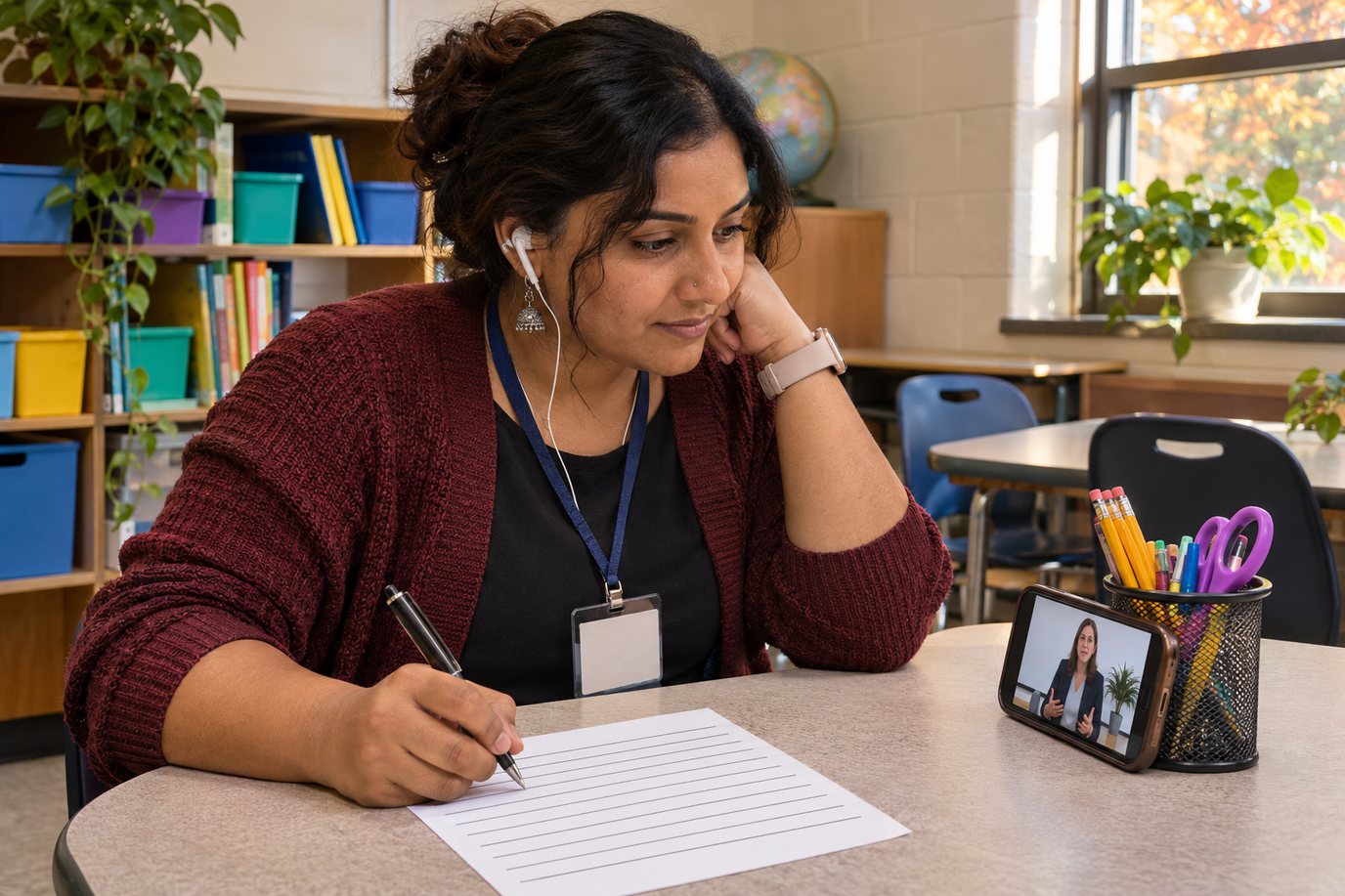
2. Live or self-paced?
Self-paced sessions fit a paraprofessional’s day, which rarely has a free hour at the same time as anyone else’s. Live sessions let people ask questions. Whichever you choose, the research points to what happens next: a 2017 meta-analysis by Matthew Brock and Erik Carter found that training for teachers and paraprofessionals raised how faithfully staff carried out interventions, and training that combined modeling with performance feedback was associated with better implementation (ERIC EJ1141691). So plan the follow-up at school: the teacher shows one move from the session, watches the paraprofessional try it, and says briefly what went well.
A free live option for paraprofessionals: Jeff Kasik, BCBA, presents “Three moves for the first minute of a hard task” on Tuesday, December 8, 2026, 6:15 to 7:00 PM Central (register free).
3. Do the hours count where you work?
Your district, your state education agency or your licensing board decides which training hours it accepts, for license renewal or for paraprofessional requirements. Ask before you start, and keep every certificate. The free providers say the same about their own certificates: IRIS says its certificates are “appropriate for professional development requirements in circumstances where clock hours are accepted” (IRIS), and AFIRM asks you to “check with your agency/organization” (AFIRM).
4. What does it cost, per person and per team?
Compare the price for one person with the price for your whole team, whether it is paid once or yearly, how long each person has to finish, and whether there is a free trial to judge it first. If you are not sure what your staff need most, ask them: our free staff autism training needs survey comes with a tally sheet.
For a school team
03A one-term plan for a team
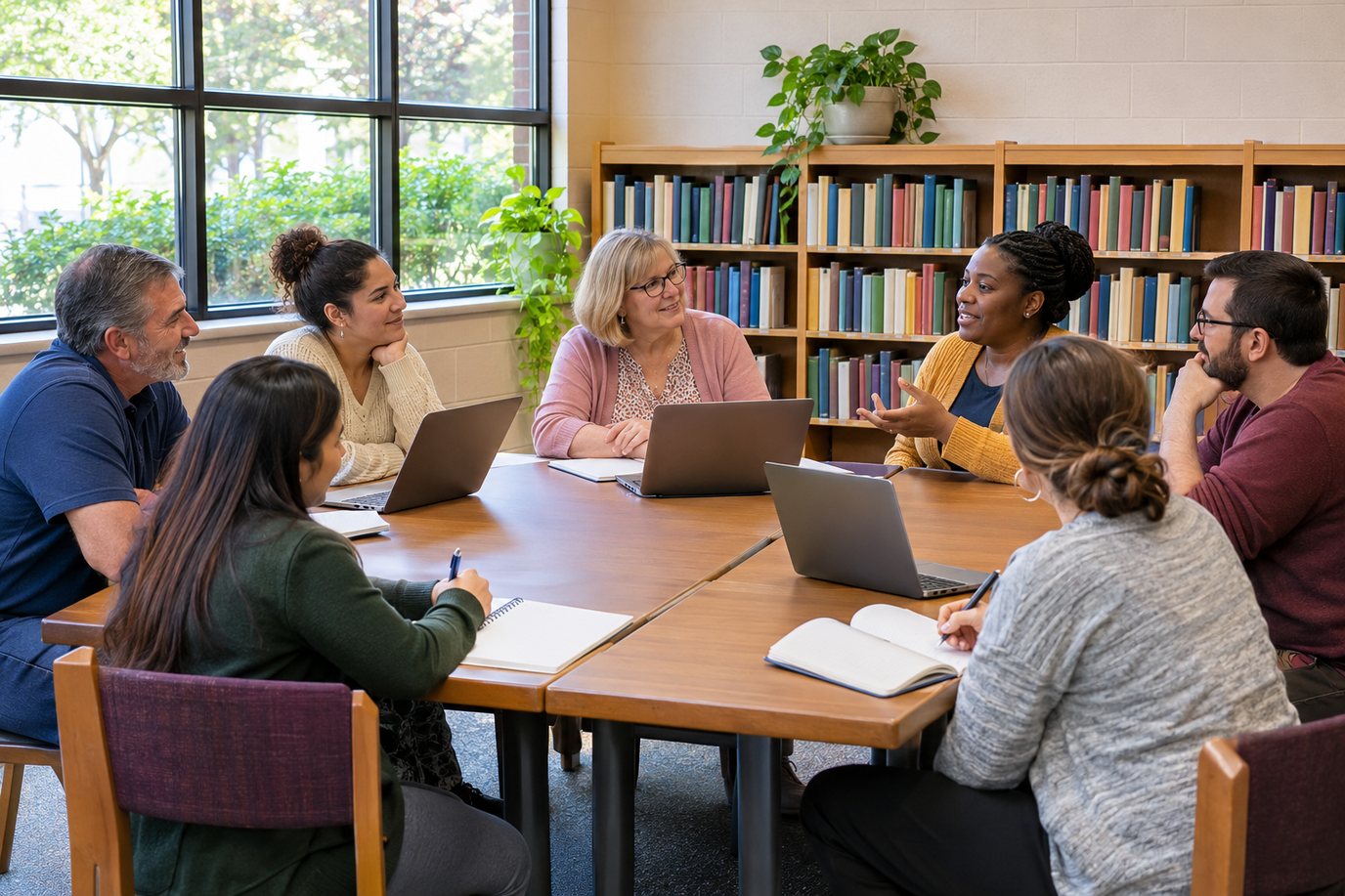
One way a school team can combine a shared course with the free modules in a single term:
- Week 0: the special education lead and one or two paraprofessionals try the first two sessions of Level 1 free for 7 days (how a school try-out works).
- Weeks 1 to 9: everyone watches one Level 1 session a week, on a phone or a computer, in their own time.
- Every other week: a 15-minute team meeting where each person names one method they used with a student, and the teacher gives feedback.
- Alongside: each paraprofessional takes the one AFIRM module that matches a student’s goal, such as visual cues or prompting.
- At the end: the final exam, then compare each student’s steps done on their own with the start of term. The goal is each student’s independence.
From the course records, November 15, 2026
04Special Learning’s training for school teams
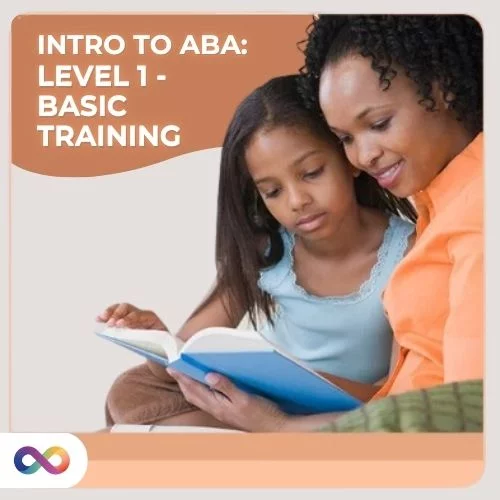
Intro to ABA: Level 1
Intro to ABA: Level 1 is a course on the methods and techniques of ABA, built for the people who work with the child every day: parents and caregivers, teachers, paraprofessionals and behavior technicians. Its nine online sessions, drawn largely from work with young children in classrooms and homes, cover what autism is, an overview of ABA, methods of teaching, errorless teaching and prompting, active student responding, beginner classroom participation skills, and an introductory session on functional behavior assessment. A final exam follows the sessions, and the course comes with downloadable materials. Prompting and functional behavioral assessment, two of its topics, are both among the 28 evidence-based practices in NCAEP’s 2020 report.
- One person: $199, paid once, with 11 weeks to complete the course. It is not a subscription (the course page).
- A school training 10 or more: $99 a person, paid once. Each person has 12 weeks from the day they activate their own access, so staff who start later still get their full 12 weeks (the group course page).
- The 7-day free trial: the individual Level 1 trial offers the first two sessions, “What is Autism” and “ABA Overview”, for 7 days. Each person needs their own account; no payment card is requested for the trial (start the individual free trial).
Completing this course earns a Special Learning certificate of completion.
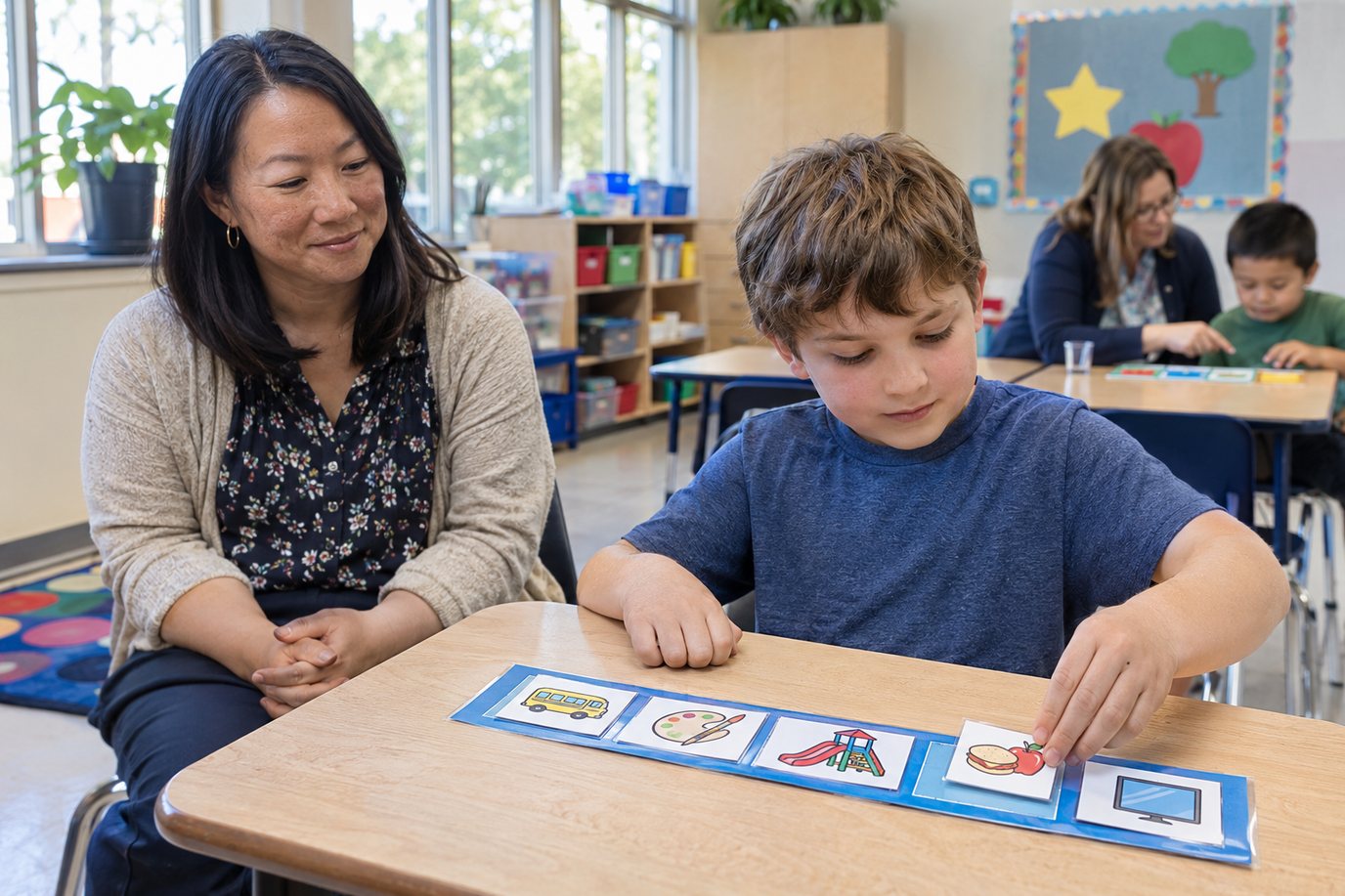
Professional Development Video Library for Special Educators
Recorded sessions for special educators, paraeducators and directors, including strategies to increase beginner classroom participation, functional behavior assessment and the behavior support plan, data collection, sensory processing and IEP team collaboration. $159 for 12 months of access, one payment, with a 7-day free trial that covers all the recordings it includes (the library page).
See Level 1 for one personWhen the school pays
05How a US school buys
Each district has its own purchase process, and your business office knows the route that applies. Here is how it works with us.
- Try it first. The special education lead and one or two staff take the 7-day free trial (the try-out, step by step).
- Plan the team. Plan your team and see the cost.
- Ask for a quote. We send a numbered, written quote your office can approve, or raise a purchase order against. Send us the purchase order number and we put it on the invoice.
- Or pay by card. A school paying by card for a group of 10 or more can also order online.
More for school teams: training for schools, ABA training online for special education teachers, autism training for paraprofessionals, a district program, and ABA training for paraprofessionals and aides.
Questions
06Questions teachers and school teams ask
Where can I get special education training online for free?
Four free public sources: the IRIS Center at Vanderbilt University, supported by the U.S. Department of Education’s Office of Special Education Programs; AFIRM at UNC Chapel Hill, with 28 modules on evidence-based practices for autistic learners; OCALI’s Autism Internet Modules, 50 free, self-paced modules; and the 2020 NCAEP report on 28 evidence-based practices.
Where can paraprofessionals get special education training online?
AFIRM for Paraeducators offers five free modules of 2 to 3 hours each for paraeducators working with students aged 5 to 12. Special Learning’s Intro to ABA: Level 1 is built for teachers and paraprofessionals alike, $199 for one person or $99 a person for a school training 10 or more, with a 7-day free trial of the first two sessions (for paraprofessionals and aides).
Do online special education training hours count toward my license or my district's requirements?
Your district, state education agency or licensing board decides which hours it accepts, so ask before you start and keep every certificate. IRIS says its certificates are “appropriate for professional development requirements in circumstances where clock hours are accepted” (IRIS PD certificates).
Is self-paced online training as good as live training?
Either can work. Self-paced fits staff schedules; live lets people ask questions. A 2017 meta-analysis found that training which combined modeling with performance feedback was associated with better implementation by teachers and paraprofessionals (ERIC EJ1141691), so plan practice with feedback at school whichever you choose.
How much does special education training online cost?
The IRIS, AFIRM, AIM and NCAEP resources are free; AFIRM’s optional CEUs are $35 a module (AFIRM). Special Learning’s Intro to ABA: Level 1 is $199 for one person, paid once, and $99 a person for a school training 10 or more. Its Professional Development Video Library for Special Educators is $159 for 12 months of access, one payment.
Can our whole school team train together online?
Yes. When a school buys Level 1 for 10 or more, it is $99 a person, paid once, and each person has 12 weeks from the day they activate their own access. We send a numbered, written quote your office can approve, or raise a purchase order against (ask for a quote).
Can I try Special Learning's course before buying?
Yes. The individual Level 1 trial offers the first two sessions, “What is Autism” and “ABA Overview”, for 7 days. Each person needs their own account; no payment card is requested for the trial (start the individual free trial).
Do staff receive a certificate?
Completing this course earns a Special Learning certificate of completion.
Your next step
Open one free module this week, and watch the first two sessions of Level 1 free for 7 days. Then decide with your team. Starting the trial asks for no payment card.
Try the first two sessions freeBuying for a team? Ask for a written quote or plan your team and see the cost.