
Generalization
Generalization is when a skill shows up with people, in places and with materials that weren't part of the teaching.[1] A child who says "cup" for one picture card, at one table, when one adult asks, has learned something real. Until the word shows up with a real cup, at home, when a parent asks, nobody knows whether it has generalized.[1][2]
Generalization programming means planning for it from the start, instead of hoping it happens once a skill is mastered. Sometimes a skill generalizes by itself. Often it doesn't, and nobody finds out until a parent mentions it months later.[1] Generality, a behavior change that lasts over time, appears in new settings, or spreads to related behaviors, is one of the seven dimensions that define applied behavior analysis.[5]
- Parents: you are often the first to see whether a skill has generalized. Next step: when a skill shows up in sessions but not at home, tell your child's team who was asking, where you were and what you used. That is what they need to plan the next step.
- Teachers and paraprofessionals: a skill a student shows with one adult may not show up with you. Next step: try Intro to ABA: Level 1, built for teachers and paraprofessionals among others, free for 7 days.
- Behavior technicians: you teach across the plan's list and run its probes. Next step: on your next probe, write who asked, where and with what beside the mark, on the probe line.
Three things can be new
| What is new | Example | The textbook word |
|---|---|---|
| The person | His father asks, where it has always been his technician | people |
| The place | The kitchen, where it has always been the teaching room | settings |
| The materials | A real cup, where it has always been a picture | stimuli (which also covers the words of the question) |
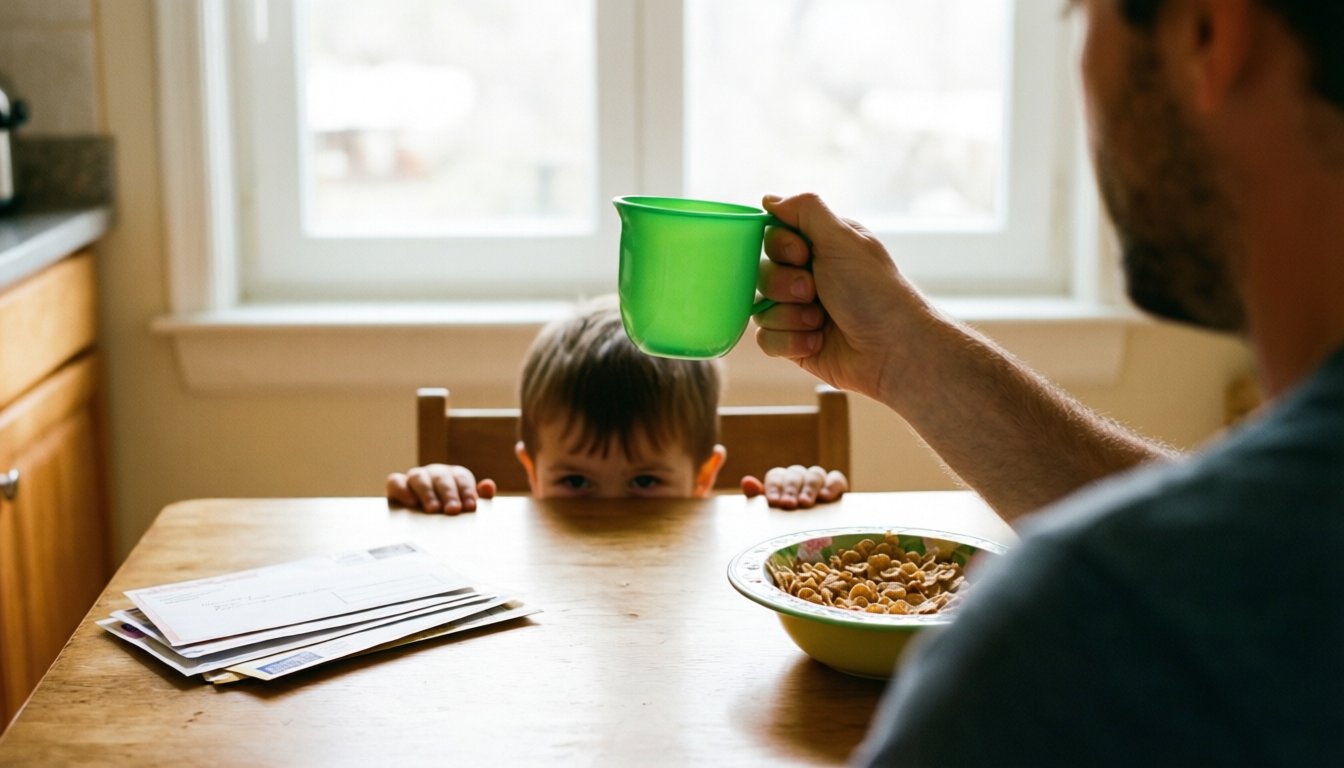
A different time of day counts too: a child taught in the morning who names a cup at dinner is generalizing.[1] When a new stimulus like the one taught brings the same response, it is called stimulus generalization: a child taught "cup" with one cup says "cup" for a different cup nobody taught with. When a new response does the same job in the same situation, such as a child taught to say "Can you help me?" who says "I'm stuck on this one," it is called response generalization.[1]
A skill that lasts over time in the same situation is something else: maintenance.[1]
How a plan builds it
Our own curriculum has taught the same approach for years: have the child do the task with different teachers, in different settings and with a variety of materials, and change the wording of the instruction, from "match circle" to "find the same circle."[2] Our technician lessons name four things that make generalization more likely:[1]
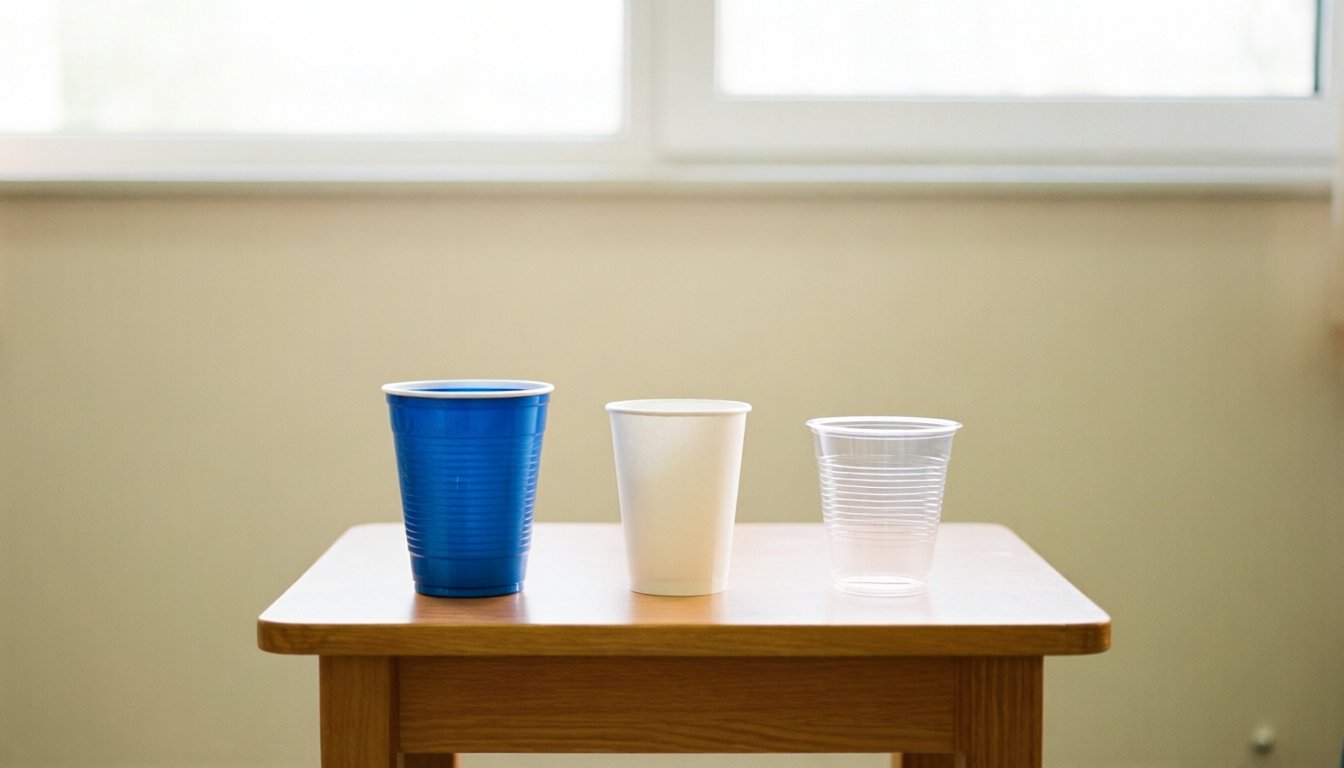
- Many examples. Teach "cup" with three cups that differ in color, size and material, so the only thing they share is being a cup. With one picture, nobody can tell whether the child is answering to the cup or to the card's white border. This is called multiple exemplar training, or teaching sufficient examples.
- Things from the real setting. Use cups like the ones in the child's kitchen. This is called programming common stimuli.
- Prompts that come off in steps. This is prompt fading.
- Reinforcement that moves toward everyday life. Plans commonly go from a reinforcer for every answer to one for some answers, and then to what the skill earns at home: a smile or an answer. Taking either support away all at once often makes a new skill stop showing up.
Teaching enough examples and programming common stimuli were named in a 1977 paper that set out ways to program generalization; it called teaching a skill and hoping it spreads "train and hope."[4]
The plan lists the people, places and materials to teach across, under its generalization procedures, and sets each step. The teaching trial itself doesn't change; only the person, place or materials change, and only as the list says.[1] Our Level 1 course makes the same point about teaching in the natural environment: teaching a skill in each environment is how it generalizes, so the learner isn't only answering by rote.[3]
Checking it: the probe
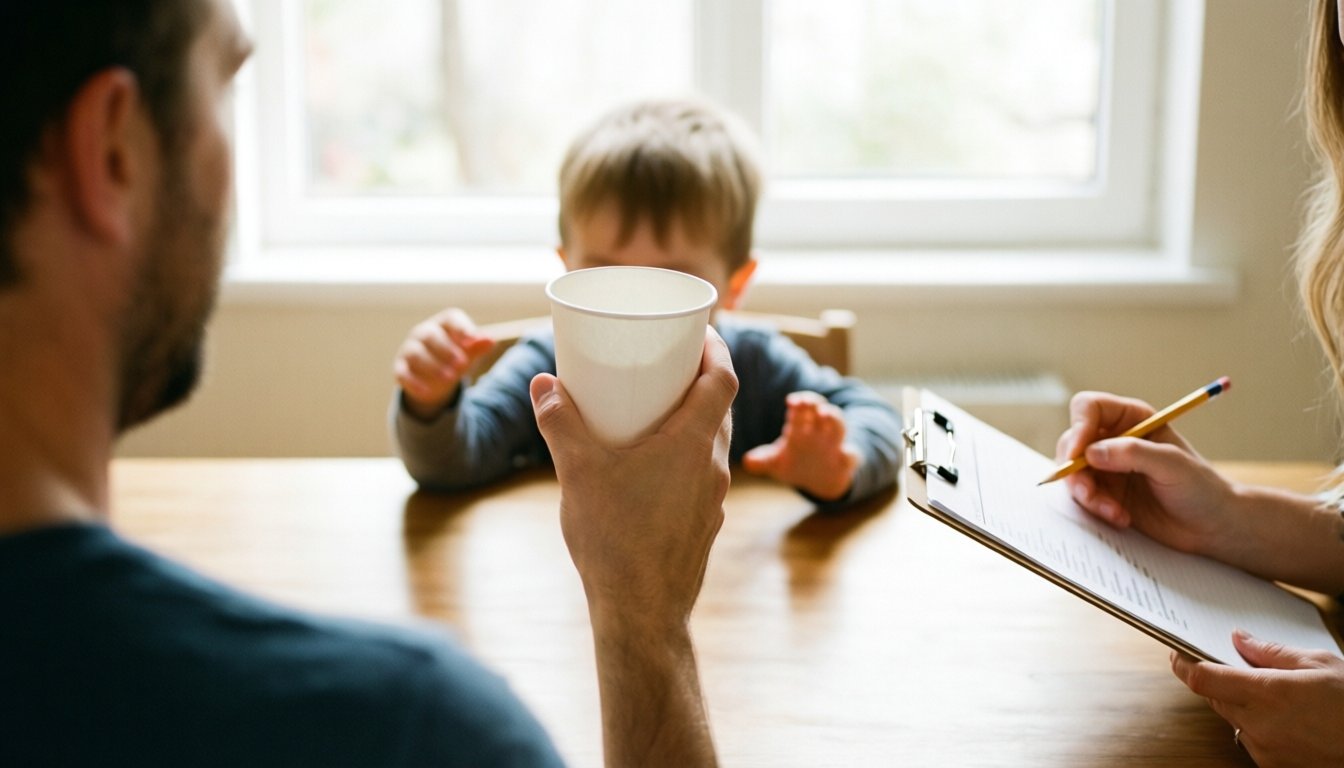
Teaching across the list gets a learner ready. It doesn't show whether they can do the skill with something nobody has taught them. A generalization probe checks that:[1]
- Bring out something new: a person, place or material the learner hasn't been taught with.
- Ask once, with no help at all. If the adult mouths the first sound, the probe has measured the adult.
- Whatever the learner says, respond as the plan says (one example plan uses a plain "Thanks," with no reinforcer and no correction).
- Mark it plus or minus on its own probe line, apart from the teaching trials, with who asked, where and with what.
Plans commonly run probes before teaching, during it and after the skill is mastered. Keeping probes on their own line matters: ten of ten teaching trials and one of three probes, merged into one row, read as 85 percent, which is true nowhere.[1] A miss on a probe isn't a failed session. It shows the team where the teaching goes next.
What generalization programming does not do by itself
A probe tells the team whether the skill has generalized; it doesn't decide what to change. What a missed probe means, and what goes on the list next, is the supervisor's call; the technician reports what was seen, with the numbers, the same day.[1]
Common questions
Doesn't a mastered skill generalize on its own? Sometimes. Often it doesn't, which is why a plan lists the people, places and materials to teach across and checks with probes.[1]
Is maintenance the same as generalization? No. Maintenance is a skill lasting over time with the same person, place and materials; generalization is the skill showing up with someone, somewhere or something new.[1]
Why not keep using the example that works? More right answers with the same cup teach nothing new about cups. The plan's next example is how the learner learns that the word goes with more than one thing.[1]
Related strategies
Discrete trial training · Natural environment teaching · Prompting · Discrimination training · Maintenance
Learn it with Special Learning
- Course: Intro to ABA: Level 1 teaches the basic methods of ABA for parents, caregivers, teachers and paraprofessionals. A free 7-day trial covers the first 2 sessions, with no payment card.
Sources
- Special Learning. RBT 3.0, Lesson E-14, "Generalization: new people, places and materials" (forthcoming).
- Special Learning. ABA Teaching Guide, curriculum guide for parents and teachers (about 2011 to 2014), "Generalization."
- Special Learning. Intro to ABA: Level 1, "Teaching Methods" session, Michele LaMarche.
- Stokes, T. F., & Baer, D. M. (1977). An implicit technology of generalization. Journal of Applied Behavior Analysis, 10(2), 349-367. doi:10.1901/jaba.1977.10-349
- Baer, D. M., Wolf, M. M., & Risley, T. R. (1968). Some current dimensions of applied behavior analysis. Journal of Applied Behavior Analysis, 1(1), 91-97. doi:10.1901/jaba.1968.1-91