
Country guide: Canada, British Columbia
Behaviour interventionist in British Columbia: the role, funding and ABA training
- What does a behaviour interventionist do?
- Carries out the strategies and support plans a supervising professional develops, usually a behaviour consultant or behaviour analyst, helping children practise skills, take part in everyday activities and work toward goals. BC: choosing providers
- Who can families pay with Autism Funding?
- For a child under six, up to $22,000 a year, for professionals on the Registry of Autism Service Providers (RASP) and behaviour interventionists a RASP professional supervises. BC Autism Funding
- What do families check when they hire?
- An employee must be at least 19, not live at the child's address and have a clear, current criminal record check. BC: hiring providers
- What is changing?
- Autism Funding ends in March 2027; starting July 2026, eligible families shift to the Disability Benefit and expanded free community services. BC RASP notice
Checked against each source on November 15, 2026.

New to ABA? Our online course Intro to ABA: Level 1 is basic training in ABA methods for daily practice, built for the people who work with the child every day, behavior technicians among them. It is US$ 199, paid once. See the course
The role
What a behaviour interventionist does in BC
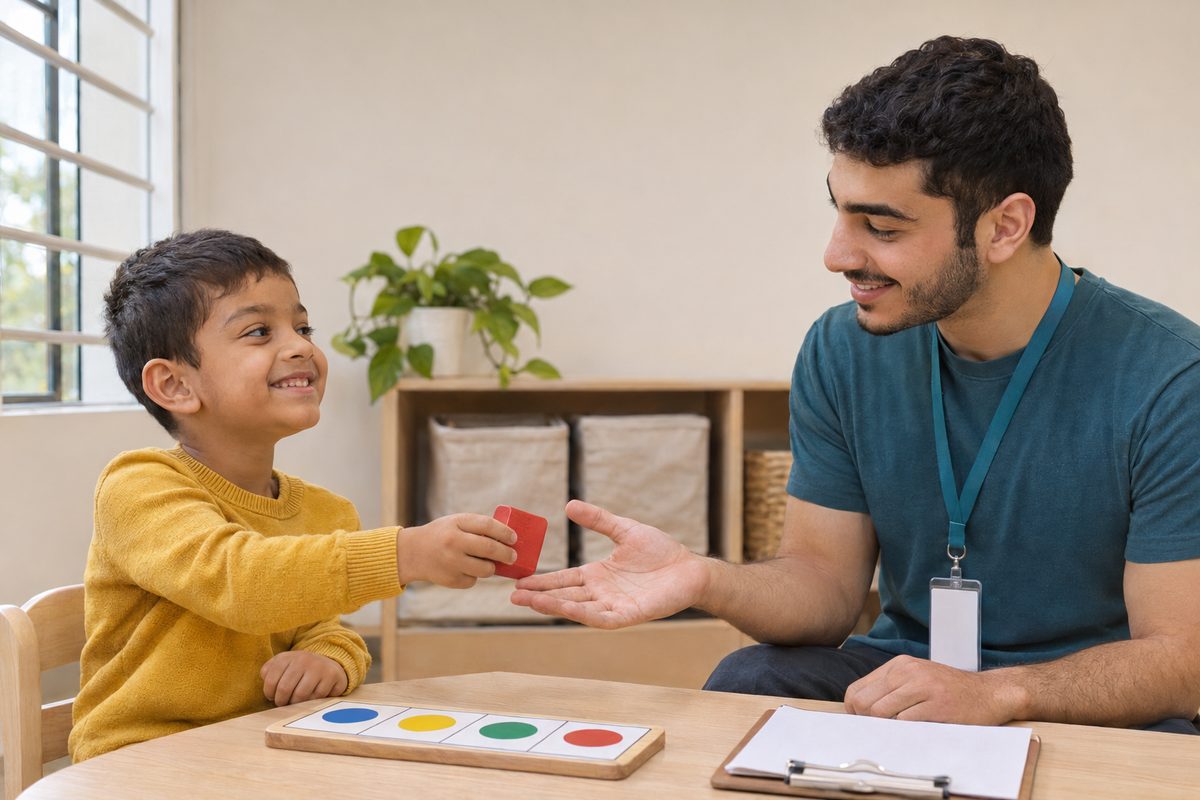
The province describes behaviour interventionists as providing direct services to children and youth by carrying out recommended strategies and support plans developed by a supervising professional, usually a behaviour consultant or behaviour analyst. They help children practise skills, take part in everyday activities and work toward goals; they do not assess needs or develop behaviour support plans independently. BC: choosing providers
The province also says behaviour interventionists should receive ongoing supervision and training by qualified professionals. BC: hiring providers
Funding
How Autism Funding pays for your work
For a child under six, Autism Funding gives up to $22,000 a year, which may be used for professionals listed on the RASP and for behaviour interventionists supervised by a RASP professional. It also covers costs of employing a service provider, such as vacation pay, Canada Pension Plan, Employment Insurance and WorkSafeBC premiums. BC Autism Funding
For a child aged 6 to 18, it gives up to $6,000 a year, which can pay behaviour interventionists, who should be supervised by a behaviour consultant or analyst, speech-language pathologist, occupational therapist or physical therapist. BC Autism Funding
The program is changing. The province says Autism Funding ends in March 2027, accepts new applications until then, and that eligible families shift to the Disability Benefit and expanded free community services starting July 2026. BC RASP notice BC RASP The RASP continues through March 2027. BC FAQ 2026 If you work with families on Autism Funding, ask your supervising consultant how each family's move will affect your hours.
How families hire
How BC families hire behaviour interventionists
Families can hire through an agency, whose professional and non-professional staff deliver services at home or at a centre; hire a self-employed contractor, which the province says most guardians choose; or hire an employee. BC: hiring providers
A family hiring an employee must, at a minimum, make sure the person is at least 19 years old, does not have the same address as the child and has a clear, current criminal record check, and must follow employment standards and WorkSafeBC requirements. BC: hiring providers
Ways to learn ABA
Ways to learn ABA for the role

Your supervisor's training
The province says behaviour interventionists should receive ongoing supervision and training by qualified professionals. BC: hiring providers Ask your supervising professional for training on each child's plan.
A college certificate: Douglas College
Douglas College's Disability and Applied Behaviour Analysis certificate is 21 credits and meets the BACB's 6th edition BCaBA coursework requirements. Douglas College Other Canadian programs are in the full list on our Canada page.
An online course you start now
Intro to ABA: Level 1 is a course on the methods and techniques of ABA, built for the people who work with the child every day. See what it covers.
Becoming a consultant
From behaviour interventionist to behaviour consultant
Documented behaviour interventionist experience with children under six, supervised by someone qualified in Category A, can help you meet the RASP's Category B experience requirement. To be listed as a Category B (supervised) behaviour consultant, the province asks for at least a bachelor's degree from an accredited post-secondary institution or a BCaBA, with psychology, education or applied behaviour analysis preferred; a third- or fourth-year undergraduate course in applied behaviour analysis and one in autism; and at least three years of documented experience as a behaviour interventionist with at least six children under age six, under the supervision of someone qualified in Category A. BC: RASP categories
It also asks for at least one year in a senior interventionist or supervisory role, training and supervising interventionists, analyzing data, monitoring and adjusting programs and conducting functional behaviour assessments under Category A direction, and a letter from a supervising Category A behaviour consultant confirming ongoing direct clinical supervision. Category A (non-supervised) lists a BCBA or a bachelor's plus a master's or doctoral degree from an accredited post-secondary institution; a graduate-level ABA course and a third- or fourth-year undergraduate autism course; and two years of supervised direct child experience at master's level, one year at doctoral level, or extensive clinical experience developing and providing intensive intervention programs with at least eight children. BC: RASP categories
Keep your own record of each child, your supervisor and your hours from your first day; the province asks for documented experience and supervision records. BC: RASP categories Our free BC Behaviour Interventionist Experience Log keeps the columns of the province's Category B Supervision Record and shows your progress toward 3 years, 6 children under six and 1 senior year.
Questions
Six questions behaviour interventionists in BC ask
Do behaviour interventionists need to be on the RASP?
The RASP lists behaviour consultants, speech-language pathologists, occupational therapists and physical therapists. For a child under six, Autism Funding pays behaviour interventionists who are supervised by a professional on the RASP. BC RASP BC Autism Funding
Who supervises my work?
For a child under six, a professional on the RASP. For a child aged 6 to 18, the province says a behaviour interventionist should be supervised by a behaviour consultant or analyst, speech-language pathologist, occupational therapist or physical therapist. BC Autism Funding
What does a family check before hiring me as an employee?
That you are at least 19 years old, do not live at the child's address and have a clear, current criminal record check. Most guardians hire self-employed contractors; families can also hire through an agency. BC: hiring providers
What happens to Autism Funding in 2027?
The province says Autism Funding ends in March 2027 and accepts new applications until then. Starting July 2026, eligible families shift to the Disability Benefit and expanded free community services. The RASP continues through March 2027. BC RASP notice BC FAQ 2026
How do I become a behaviour consultant later?
Category B on the RASP asks for a bachelor's degree from an accredited post-secondary institution or a BCaBA, an upper-year course in ABA and one in autism, at least three years of documented behaviour interventionist experience with at least six children under six under a Category A supervisor, at least one year in a senior interventionist or supervisory role, and a letter from a supervising Category A behaviour consultant confirming ongoing direct clinical supervision. BC: RASP categories
Can I become an RBT while living in British Columbia?
Our Canada guide sets out where in Canada you can apply for the BACB's RBT, BCaBA and BCBA, and where BACB exams are held. Read the Canada guide.
Working in Ontario instead? Read how to become an instructor therapist in Ontario. Prices outside the US: how country prices work.
Training from Special Learning
Intro to ABA: Level 1
Intro to ABA: Level 1 is a course on the methods and techniques of ABA, built for the people who work with the child every day: parents and caregivers, teachers, paraprofessionals and behavior technicians.
It is basic training in ABA methods for daily practice, not a credential.
In Canada, Level 1 is US$ 199, paid once. How country prices work
- Nine online sessions you watch on a phone or a computer: what autism is, an ABA overview, teaching methods, pairing, errorless teaching and active student responding
- A certificate of completion when you pass the 40-question final exam at 80%
- Paid once, with 11 weeks to complete the course after you activate it

Sources
- How to choose the right service providers. Government of British Columbia. Read November 15, 2026.
- How much funding is available. Government of British Columbia. Read November 15, 2026.
- Hire and manage service providers. Government of British Columbia. Read November 15, 2026.
- Registry of Autism Service Providers (RASP). Government of British Columbia. Read November 15, 2026.
- RASP Supervised Categories (notice of changes). Government of British Columbia. Read November 15, 2026.
- Information for autism service providers. Government of British Columbia. Read November 15, 2026.
- Children and Youth with Support Needs Announcement FAQ (2026). Government of British Columbia. Read November 15, 2026.
- Disability and Applied Behaviour Analysis (Certificate). Douglas College. Read November 15, 2026.
Other countries we cover
ABA certification in 15 guides
- United StatesLicensure by state, US program tools
- CanadaEnglish
- AustraliaEnglish
- IndiaEnglish · हिन्दी
- PhilippinesEnglish
- South AfricaEnglish
- Saudi ArabiaEnglish
- United Arab EmiratesEnglish
- Gulf and Egypt, in Arabicالعربية
- BrazilEnglish · Português
- South KoreaEnglish · 한국어
- United KingdomEnglish
- SingaporeEnglish
- Spanish-speaking countriesEspañol
- Anywhere else: ABA training onlineEnglish
No guide matches that yet. See what's open wherever you live
ABA certification by country: every guide in one place → ABA around the world →