
For principals, special educators, inclusion coordinators and SENCOs in Indian schools, and for shadow teachers
Training shadow teachers and special educators: what Indian law and policy ask of schools, what a shadow teacher practises, and a way to start this term
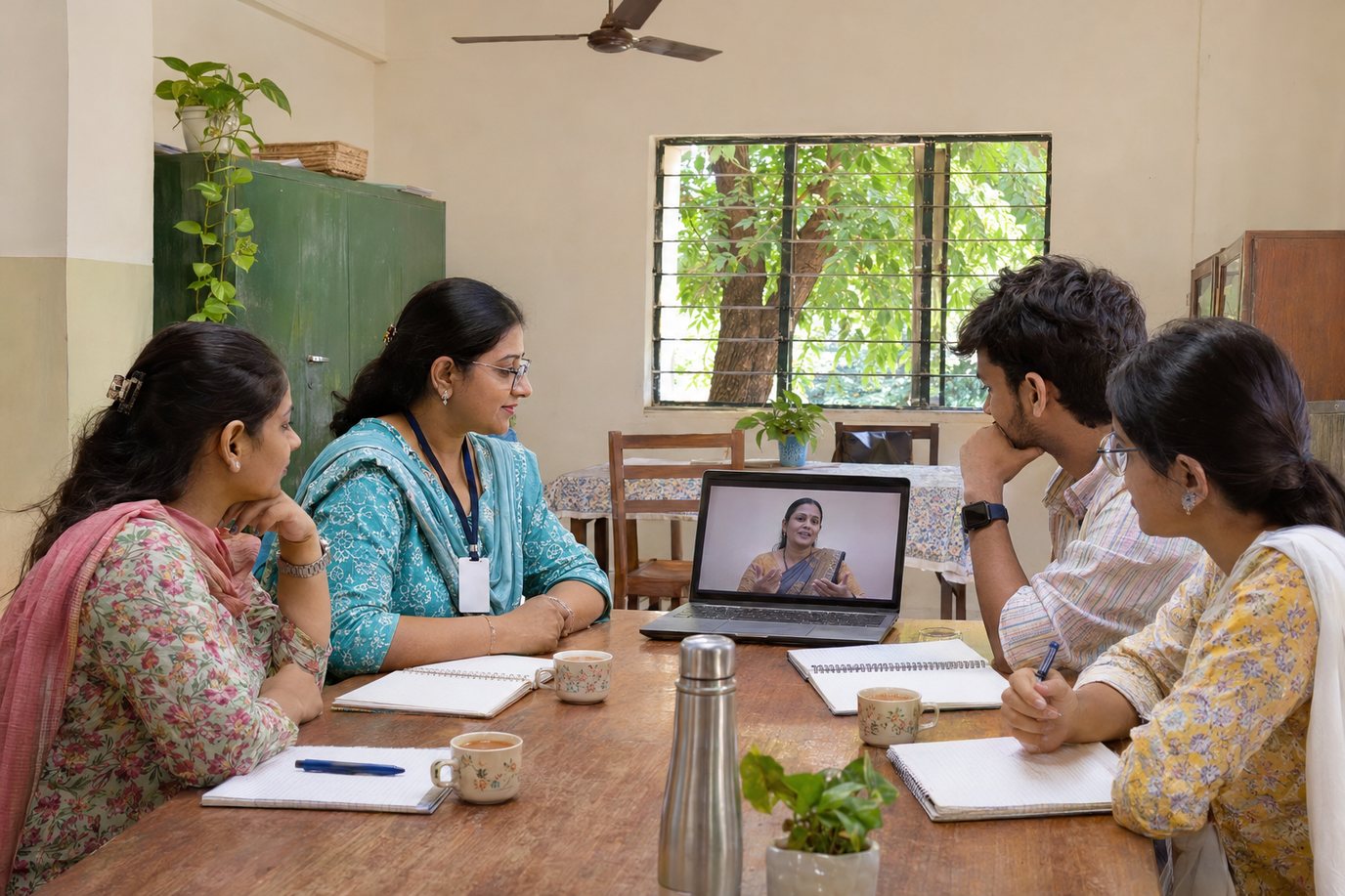
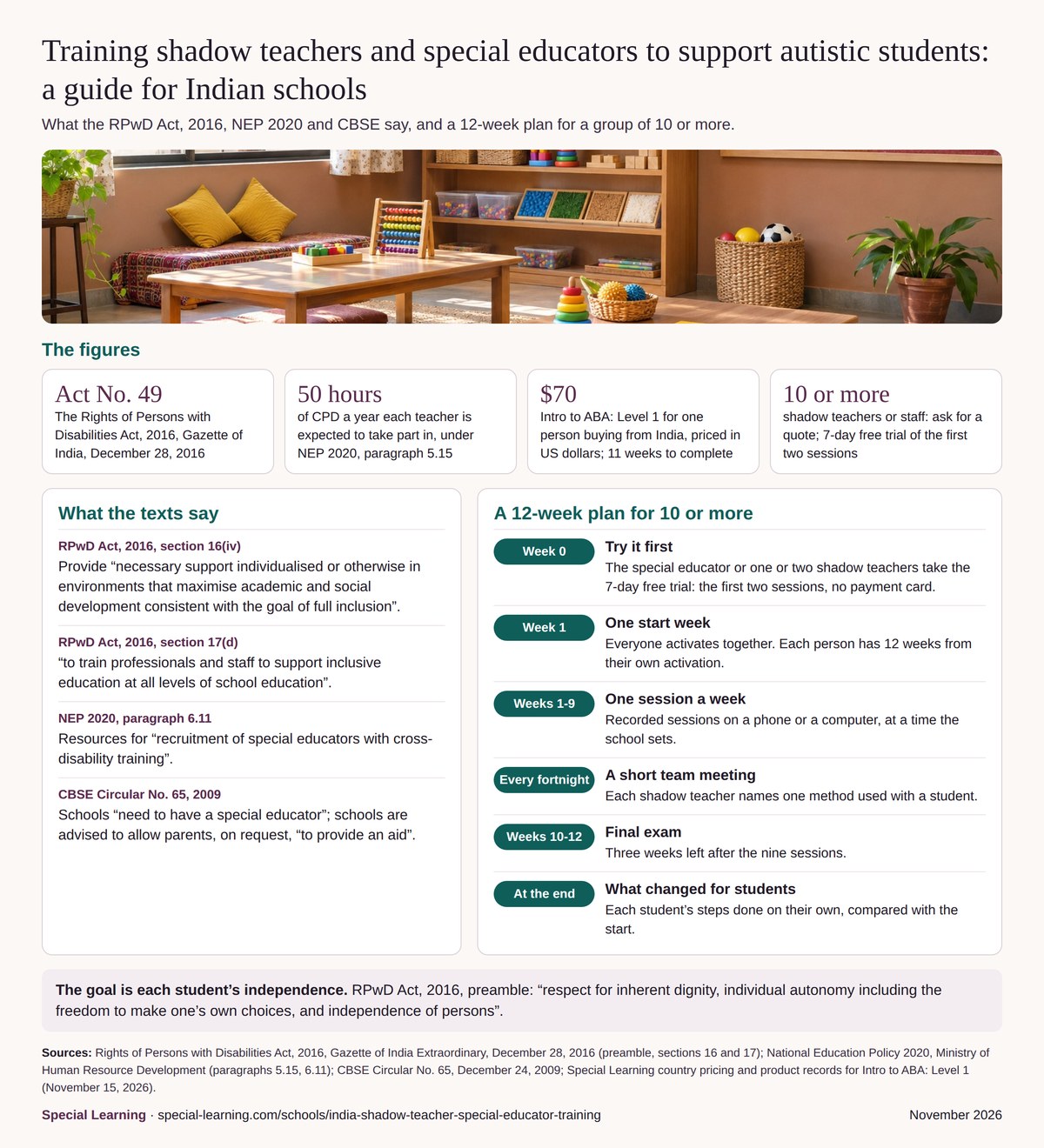
Section 16 of the Rights of Persons with Disabilities Act, 2016, headed “Duty of educational institutions”, has the appropriate Government and local authorities endeavour that the schools they fund or recognise provide inclusive education, including “necessary support individualised or otherwise in environments that maximise academic and social development consistent with the goal of full inclusion.” In many Indian schools, that individual support comes from a shadow teacher, brought in by the school or by the family, working with the class teacher and the special educator. Special Learning’s Intro to ABA: Level 1 trains shadow teachers, special educators and teachers online: nine recorded sessions on the methods of applied behaviour analysis (ABA), then a final exam, watched on a phone or a computer in each person’s own time. A person buying from India sees it at $70 in our store, priced in US dollars. A school training 10 or more asks us for a quote. Anyone can try the first two sessions free for 7 days, with no payment card.
Start the 7-day free trialTraining 10 or more shadow teachers or staff? Ask for a quote
The law’s own words, read November 15, 2026
01What the RPwD Act, 2016 asks of schools
The Rights of Persons with Disabilities Act, 2016 (No. 49 of 2016) was published in the Gazette of India on December 28, 2016. Chapter III, on education, sets out what schools are to provide and the measures government is to take. Among the principles the Act’s preamble takes from the UN Convention is “respect for inherent dignity, individual autonomy including the freedom to make one’s own choices, and independence of persons”. What the Act says, in its own words:
| Section | The Act’s words | For a principal or special educator |
|---|---|---|
| Section 2(m), definition | “inclusive education” means “a system of education wherein students with and without disability learn together and the system of teaching and learning is suitably adapted to meet the learning needs of different types of students with disabilities”. | Learning together, with teaching adapted to the student. |
| Section 16, duty of educational institutions | “The appropriate Government and the local authorities shall endeavour that all educational institutions funded or recognised by them provide inclusive education to the children with disabilities and towards that end shall”, among other things: | The words cover the schools the government funds or recognises. |
| Section 16(iii) | “provide reasonable accommodation according to the individual’s requirements” | Accommodation is planned around the individual student. |
| Section 16(iv) | “provide necessary support individualised or otherwise in environments that maximise academic and social development consistent with the goal of full inclusion” | A shadow teacher is one form of individualised support. |
| Section 16(vii) | “monitor participation, progress in terms of attainment levels and completion of education in respect of every student with disability” | Simple, regular records of what the student does show progress. |
| Section 17, specific measures | The appropriate Government and the local authorities “shall take the following measures for the purpose of section 16”, including “(c) to train and employ teachers” and “(d) to train professionals and staff to support inclusive education at all levels of school education”. | Training the staff who support inclusion is named in the law. |
Source: The Rights of Persons with Disabilities Act, 2016, Gazette of India Extraordinary, Part II, Section 1, No. 59, December 28, 2016 (official gazette copy published by the Department of Empowerment of Persons with Disabilities).
National policy
02What NEP 2020 says about inclusion and teacher training
The National Education Policy 2020 gives inclusion of children with disabilities “the highest priority”. In its own words:
- Paragraph 6.10: “Ensuring the inclusion and equal participation of children with disabilities in ECCE and the schooling system will also be accorded the highest priority. Children with disabilities will be enabled to fully participate in the regular schooling process from the Foundational Stage to higher education.” The policy says it “is in complete consonance with the provisions of the RPWD Act 2016”.
- Paragraph 6.11: schools and school complexes “will be provided resources for the integration of children with disabilities, recruitment of special educators with cross-disability training, and for the establishment of resource centres, wherever needed”, and “will work and be supported for providing all children with disabilities accommodations and support mechanisms tailored to suit their needs and to ensure their full participation and inclusion in the classroom.”
- Paragraph 6.14: “The awareness and knowledge of how to teach children with specific disabilities (including learning disabilities) will be an integral part of all teacher education programmes”.
- Paragraph 5.21, special educators: “There is an urgent need for additional special educators for certain areas of school education.” Such teachers “would require not only subject-teaching knowledge and understanding of subject-related aims of education, but also the relevant skills for understanding of special requirements of children.”
- Paragraph 5.15, continuous professional development: opportunities “will be offered in multiple modes, including in the form of local, regional, state, national, and international workshops as well as online teacher development modules.” “Each teacher will be expected to participate in at least 50 hours of CPD opportunities every year for their own professional development, driven by their own interests.”
Source: National Education Policy 2020, Ministry of Human Resource Development (now the Ministry of Education), Government of India, paragraphs 5.15, 5.21, 6.10, 6.11 and 6.14 (copy published by the Press Information Bureau).
CBSE’s own words, with dates
03What CBSE has told its schools
CBSE has written to its affiliated schools about the adult who sits with a student and about special educators. Two of its circulars, in their own words and with their dates:
- Circular No. 65, December 24, 2009 (to the heads of independent schools affiliated to CBSE) describes an aid as an adult who sits with the student, encouraging and motivating them to keep up with the class, and says: “Schools are advised to allow parents when they make a request to provide an aid so that individual attention is possible for the child and enables the student to grow and learn alongwith the other peers in the class.” The same circular says “Specific goals should be set for each child with special need based upon the appraisal. For this purpose the schools need to have a special educator as has already been recommended earlier.” (CBSE Circular No. 65, 2009)
- Circular 13/2017, June 13, 2017, “Mandatory appointment of special educator in all schools”: “the Management and the Head of the CBSE affiliated schools are hereby directed to strictly follow the above provisions and make arrangement immediately to appoint special educators in their respective school(s).” (CBSE Circular 13/2017)
In many schools the special educator plans each student’s goals with the class teacher, and the shadow teacher carries those plans into the lesson, minute by minute. Training both on the same methods helps them work as one team.
Registration
04Special educators and the Rehabilitation Council of India
In India, special teachers with a qualification the Rehabilitation Council of India (RCI) recognises register with the RCI. In the RCI’s words: “The Rehabilitation Council of India(RCI) was set up as a registered society in 1986. On September 1992 the RCI Act was enacted by Parliament and it became a Statutory Body on 22 June 1993.” “The mandate given to RCI is to regulate and monitor services given to persons with disabilities, to standardise syllabi and to maintain a Central Rehabilitation Register of all qualified professionals and personnel working in the field of Rehabilitation and Special Education.”
On registration, the RCI says: “Rehabilitation Professionals/ Personnel having Council’s recognized qualification should apply on appropriate form to get themselves registered in the Central Rehabilitation Register.” The categories it lists include special teachers, clinical psychologists, rehabilitation psychologists, and audiologists and speech therapists (RCI, Categories U/S 19).
Sources: Rehabilitation Council of India, About us; Rehabilitation Council of India, Categories U/S 19 (both last updated September 24, 2025).
Shadow teachers in the classroom
05What a shadow teacher practises, and a 12-week plan
A shadow teacher gives one student individual support in an inclusive class, working with the class teacher and the special educator. Schools and families use different titles: shadow teacher, facilitator, aide, learning support assistant. Our page on shadow teacher training sets out the role in more detail, and our page on autism training for paraprofessionals describes the same work in US schools.
Day to day, a shadow teacher working with an autistic student helps them follow the lesson the class teacher planned, breaks a task into smaller steps when that helps, gives the least help that lets the student succeed and then less, uses the student’s visual supports, supports communication in the student’s own way, and keeps short notes the teacher and the special educator use to see progress. The class teacher stays in charge of the student’s learning. Classroom practices that support participation and independence:
- Reinforcement: “The application of a consequence following a learner’s use of a response or skills that increases the likelihood that the learner will use the response/skills in the future” (NCAEP, Evidence-Based Practices for Children, Youth, and Young Adults with Autism, 2020). In class that can be specific praise, a turn with a favourite activity or a token towards a choice.
- Prompting, then fading: a prompt is “Verbal, gestural, or physical assistance given to learners to support them in acquiring or engaging in a targeted behavior or skill” (NCAEP, 2020). The shadow teacher gives the help that lets the student succeed, then removes it as the student takes over.
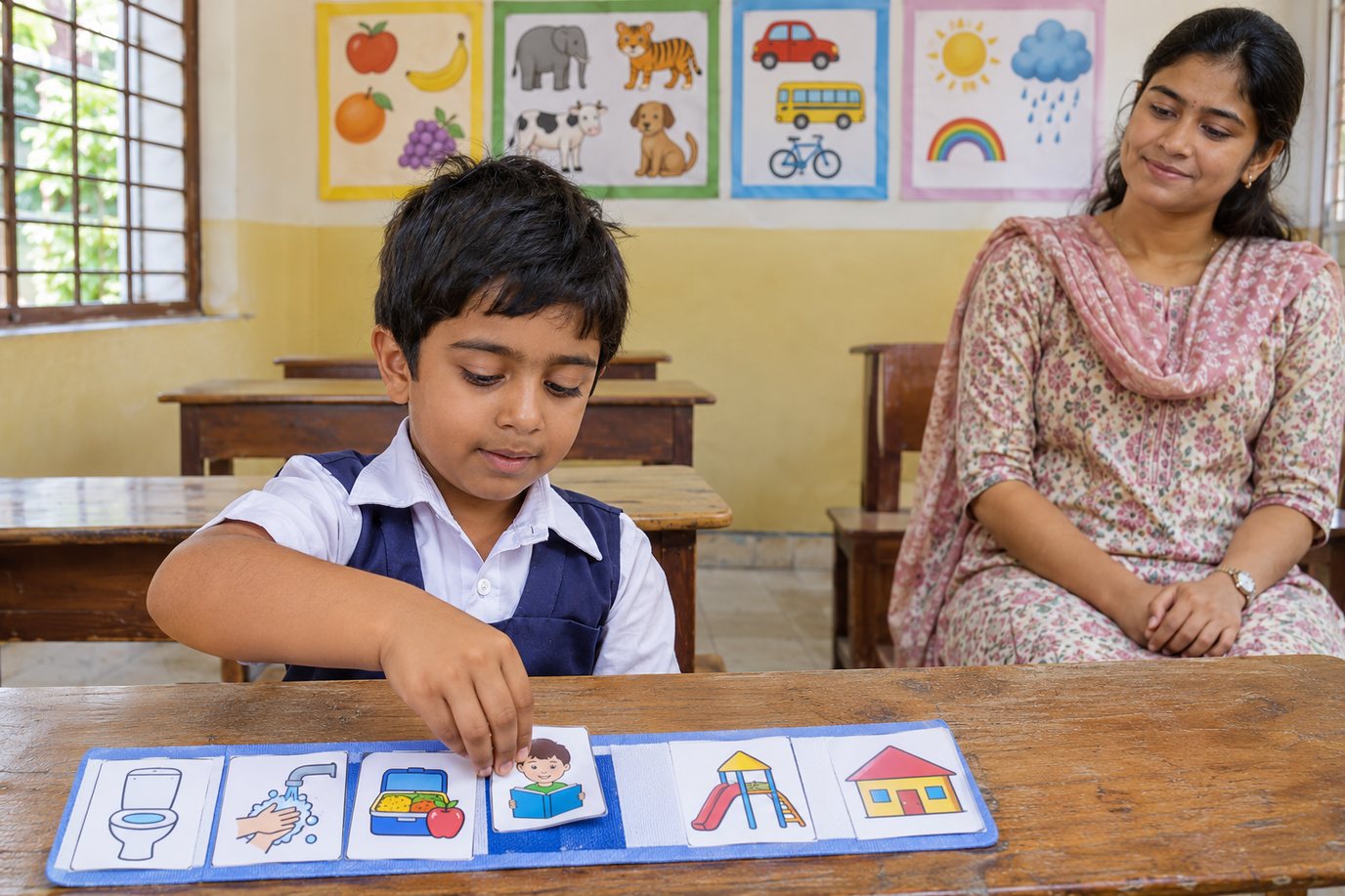
- Visual supports: “A visual display that supports the learner engaging in a desired behavior or skills independent of additional prompts” (NCAEP, 2020): a picture timetable, a first-then card, a choice board.
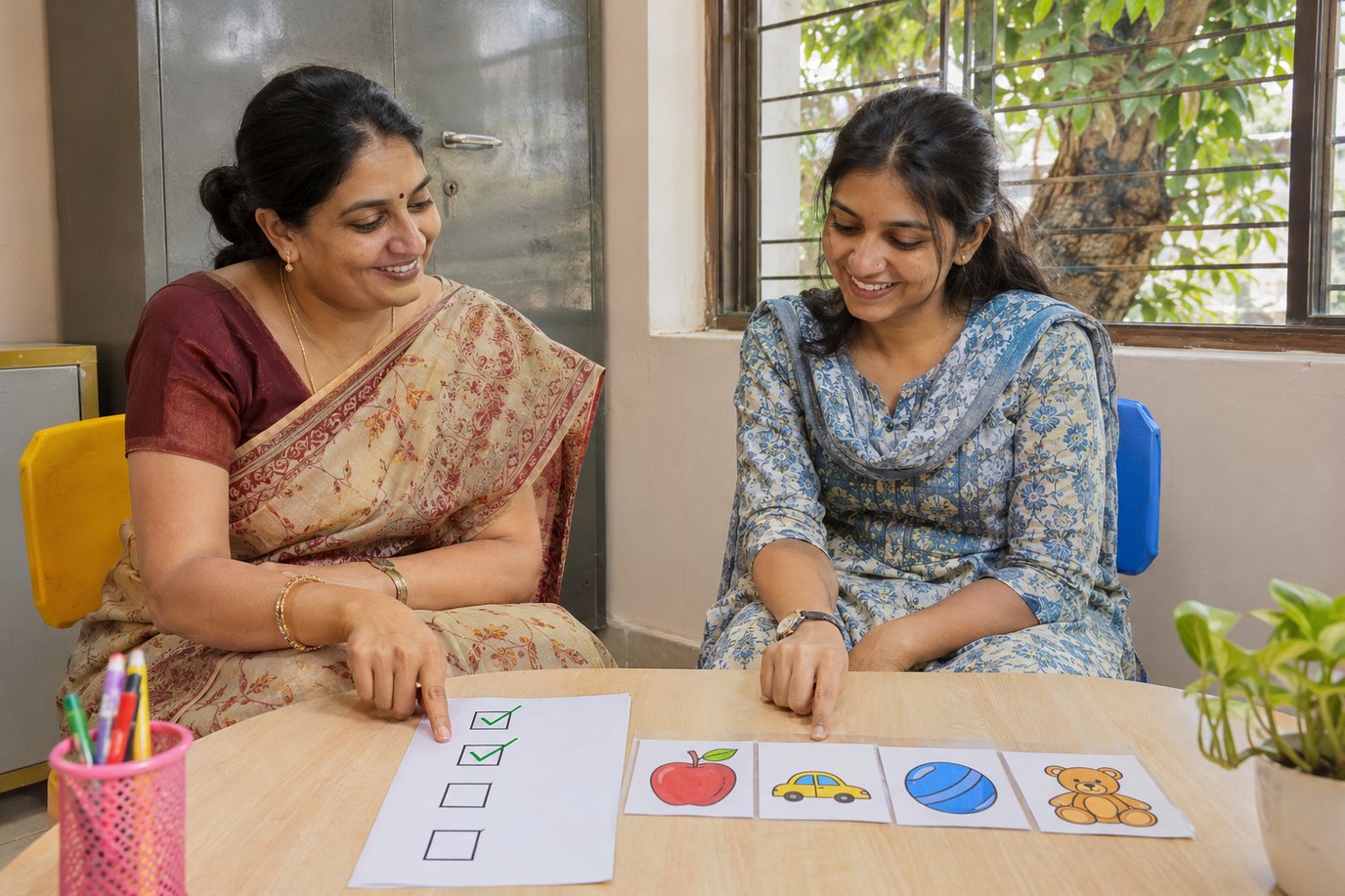
- Simple data: each step marked as done on their own or with a named prompt, the kind of record AFIRM’s data sheets keep (AFIRM, UNC Chapel Hill, Prompting brief packet).
- Stepping back: the best measure of a shadow teacher is how much the student can do without them. Let the student try first, remove help over time, and note the moments the student managed alone.
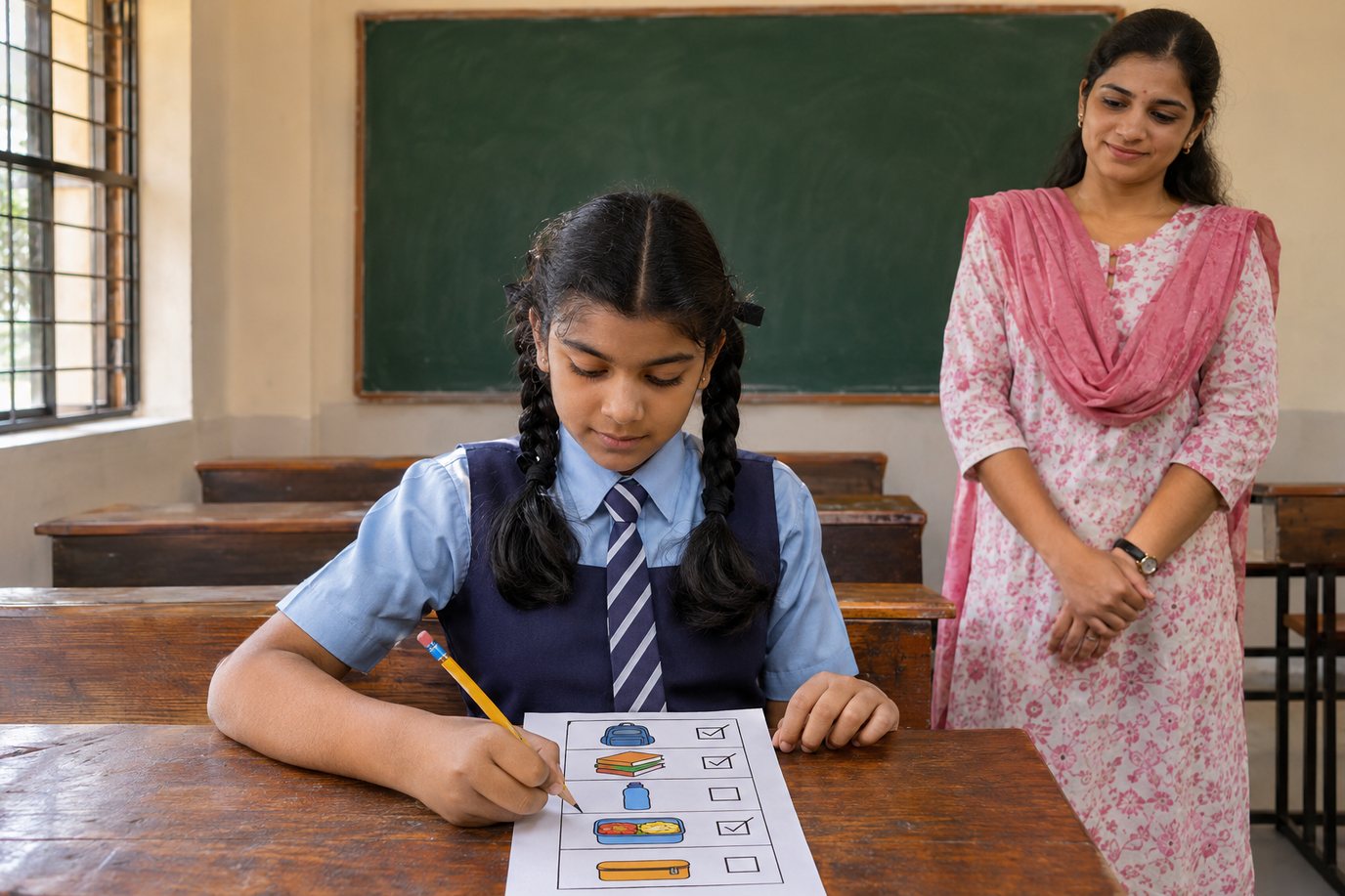
Level 1 includes errorless teaching and prompting, active student responding, beginner classroom participation skills, and an introduction to understanding behaviour through a functional behaviour assessment.
A 12-week plan for a group of 10 or more. Week 0: the special educator or one or two shadow teachers take the free trial. Week 1: everyone activates in the same week; each person has 12 weeks from their own activation. Weeks 1 to 9: one session a week, in each person’s own time. Every fortnight: a short meeting where each shadow teacher names one method they used with a student. Weeks 10 to 12: the final exam. Then compare each student’s record of steps done on their own with the start.
When the school pays
06How a school buys
Each school and trust has its own purchase process, and your accounts office knows the route that applies. Here is how it works with us.

- Try it first. The special educator or inclusion coordinator, or one or two shadow teachers, take the 7-day free trial: the first two sessions, with no payment card (start the trial).
- Ask for a quote. Tell us your school, how many staff and that you are in India; the form lists India as a country. In the notes, say what your accounts office needs, such as a quote on letterhead or a vendor form, and we reply with what we can provide.
- Pay. We send the school an invoice from Special Learning, Inc. in US dollars, paid by bank wire. Or pay by card in our store. Access opens once payment clears.
Planning in more detail? Plan your team.
From the course records, November 15, 2026
07Options and prices
Intro to ABA: Level 1 is a course on the methods and techniques of ABA, built for the people who work with the child every day: parents and caregivers, teachers, paraprofessionals and behaviour technicians. Its nine online sessions run from what autism is to prompting, classroom participation and understanding behaviour (topics covered). A final exam follows, and each session has a short pre-test and post-test.
- One person buying from India: $70, paid once, with 11 weeks to complete the course. There is no code to enter: the store shows the India price when you shop from India (country pricing).
- A school training 10 or more: ask us for a quote, with 12 weeks from the day each person activates. How a school buys.
- The 7-day free trial: the first two sessions, with no payment card (start the trial).
Completing this course earns a Special Learning certificate of completion.
Buy Level 1 for one personQuestions
08Questions principals and special educators ask
Is a shadow teacher the same as a paraprofessional?
For this course, yes. Indian schools and families say shadow teacher, facilitator or aide, international schools often say learning support assistant, and US schools say paraprofessional; the course is the same (shadow teacher training).
How much does Level 1 cost for a person in India?
A person buying from India sees Level 1 at $70, paid once, priced in US dollars. The store shows that price automatically when you shop from India, with no code to enter (country pricing).
We want to train 10 or more shadow teachers and staff. What does it cost?
Ask us for a quote through the quote form: tell us your school, how many people and that you are in India, and we reply with a quote.
How do we pay, and can we get the paperwork our accounts office needs?
We send the school an invoice from Special Learning, Inc. in US dollars, paid by bank wire. Or pay by card in our store. Access opens once payment clears. In the notes of the quote form, tell us what your accounts office needs and we reply with what we can provide.
Can we try the course before we buy for the team?
Yes. The 7-day free trial covers the first two sessions, and starting it asks for your email, a password and your role, with no payment card (start the trial).
What do shadow teachers learn in Level 1?
Nine online sessions: what autism is and an overview of ABA, methods of teaching, errorless teaching and prompting, active student responding, teaching methods in application, beginner classroom participation skills, and a first session on decreasing problem behaviour with a functional behaviour assessment. The examples are drawn largely from work with young children in classrooms and homes. A final exam follows, and each session has a short pre-test and post-test.
How long does each person have?
One person buying alone has 11 weeks to complete the course. When a school buys for 10 or more, each person has 12 weeks from the day they activate their own access, so staff who join later start their 12 weeks when they begin.
Do staff receive a certificate?
Completing this course earns a Special Learning certificate of completion.
Can our special educators and class teachers take it too?
Yes. Level 1 is built for teachers as well as support staff, so the special educator, the class teacher and the shadow teacher who support the same student can learn the same methods.
Can a family that employs a shadow teacher buy it for them?
Yes. A parent can buy Level 1 for one person in our store, and the shadow teacher can start with the free trial (start the trial). CBSE Circular No. 65 of 2009 advised schools “to allow parents when they make a request to provide an aid” (CBSE Circular No. 65).
What does the RPwD Act, 2016 say about support in school?
Section 16, headed “Duty of educational institutions”, includes in (iv) to “provide necessary support individualised or otherwise in environments that maximise academic and social development consistent with the goal of full inclusion”, and section 17(d) names the measure “to train professionals and staff to support inclusive education at all levels of school education” (Rights of Persons with Disabilities Act, 2016).
Your next step
Watch the first two sessions of Level 1 free for 7 days, then decide with your special educator and shadow teachers. Starting it asks for no payment card.
Try the first two sessions freeMore for schools: training for schools, training for shadow teachers, autism training for paraprofessionals, training for international schools, teaching assistant training for UK schools, educational assistant training for Canadian schools and teacher aide training for Australian schools. For ABA practitioners and certification in India: our India guide.